Master Plan for Delhi 2047 Outlines Revival of Yamuna Floodplain and Ridge
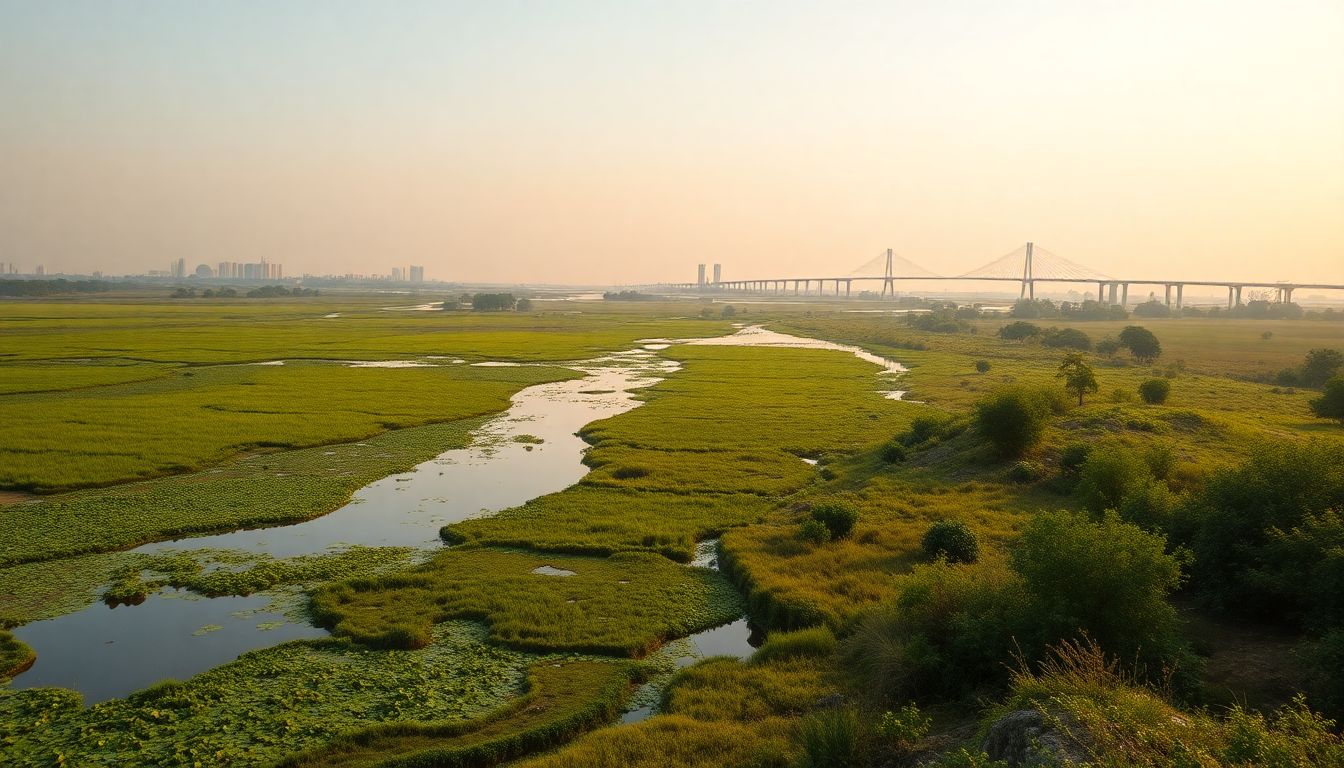
The Master Plan for Delhi (MPD) 2047 has set out an urban framework to place ecological restoration and heritage conservation at the core of the national capital's development, targeting major revivals of the Yamuna riverfront and the Ridge.
Under the plan, Delhi proposes to protect, conserve, and ecologically restore nearly 1,700 hectares of the Yamuna floodplain. To tackle water pollution at the source, drains discharging into the river will be intercepted and treated through upgraded sewage infrastructure, constructed wetlands, and bioremediation techniques.
The framework also includes the development of a 52-kilometre cycling corridor alongside walking trails, green expanses, and organised recreational areas. The project aims to reconnect residents with the riverfront while preserving the natural ecology of the revived floodplain sections.
In addition to the riverfront initiatives, MPD-2047 outlines the ecological restoration of roughly 7,784 hectares of the Ridge, an extension of the Aravali range. The initiative will rely on scientific ecosystem management and native plant species to rebuild local biodiversity and safeguard Delhi's long-term environmental balance.
The master plan integrates these natural spaces into a broader green-blue network connecting the Yamuna, the Ridge, urban forests, biodiversity parks, water bodies, drains, and neighbourhood parks. Green corridors and urban forests are intended to cool neighbourhoods, improve air quality, and help the capital manage extreme rainfall and groundwater recharge.
On the cultural front, MPD-2047 plans to bring close to 1,500 heritage assets under structured Cultural Resource Management Plans. The policy emphasises adaptive reuse, allowing heritage buildings to be repurposed as museums, libraries, hotels, offices, and cultural venues.
To make conservation viable for property owners and developers, the framework introduces planning and financial incentives, including Transferable Development Rights, façade retention, and regulated space standard relaxations subject to safety norms. The plan also proposes heritage, cultural, and festival circuits linked by walkable streets to bolster tourism and local enterprise across the city.