Manufacturing Investments Reshape Housing Demand in Manesar and Jhajjar
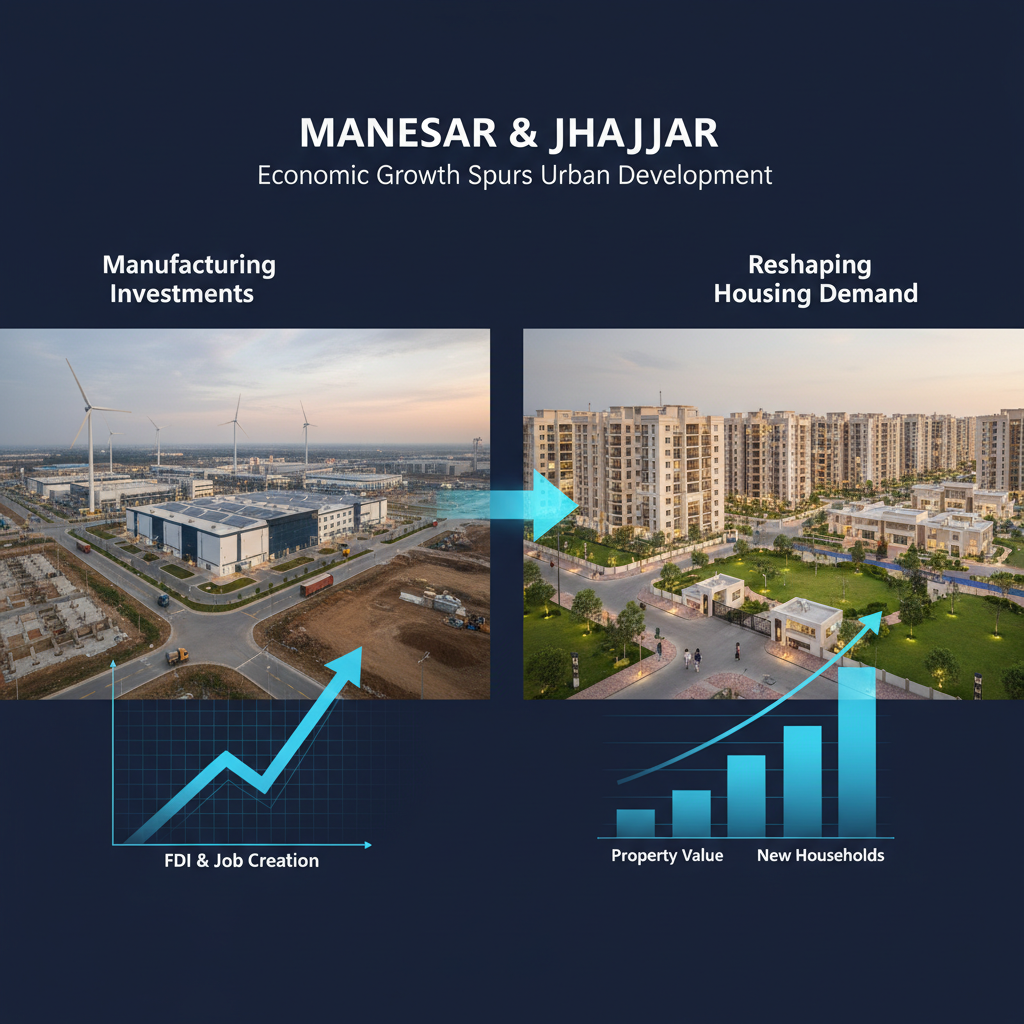
Global manufacturing investments and industrial growth in Manesar and Jhajjar are reshaping the National Capital Region's housing market, shifting residential demand away from central corporate hubs like Cyber Hub toward walk-to-work neighborhoods near factory floors. This ongoing structural pivot on the fringes of Gurgaon is driving a significant increase in home demand near manufacturing workplaces.
The shift is fueled by a steady influx of global capital and a growing workforce of industrial professionals. Haryana currently hosts nearly 400 Japanese companies, establishing the state as one of the largest Japanese industrial bases in India. This manufacturing footprint spans the automotive, engineering, and electronics sectors.
New capital is further bolstering this industrial presence. Earlier this year, Japanese major Daikin Industries announced a proposed Rs 1,000 crore investment in Manesar. This capital influx brings a consistent stream of international technical experts and operational professionals who require housing close to their work sites.
To capture this localized housing demand, developers are expanding residential projects directly within industrial zones. In Jhajjar, Reliance MET City is developing a new 140-acre township. The entire industrial project, which is spread across 8,000 acres near the KMP Expressway, currently houses over 650 companies from 11 countries and employs more than 40,000 people.
Shrivallabh Goyal, CEO of Reliance MET City, stated that manufacturing is actively reshaping where and how people choose to live. According to Goyal, senior engineers, plant managers, and technical experts on short- to medium-term postings prefer to avoid long commutes from Gurgaon or Delhi. He noted that this globally mobile, operationally driven workforce prioritizes proximity to plant floors and supplier ecosystems over city skylines.
This demand is already impacting local real estate values in established manufacturing areas. Manesar, which serves as a major northern Indian manufacturing hub with facilities for Maruti Suzuki, Honda Motorcycle, and Denso, has seen flat prices in IMT Manesar surge by 102.7 percent.