Delhi Auto Drivers Fear Income Loss Ahead of January 2027 Electric Vehicle Mandate
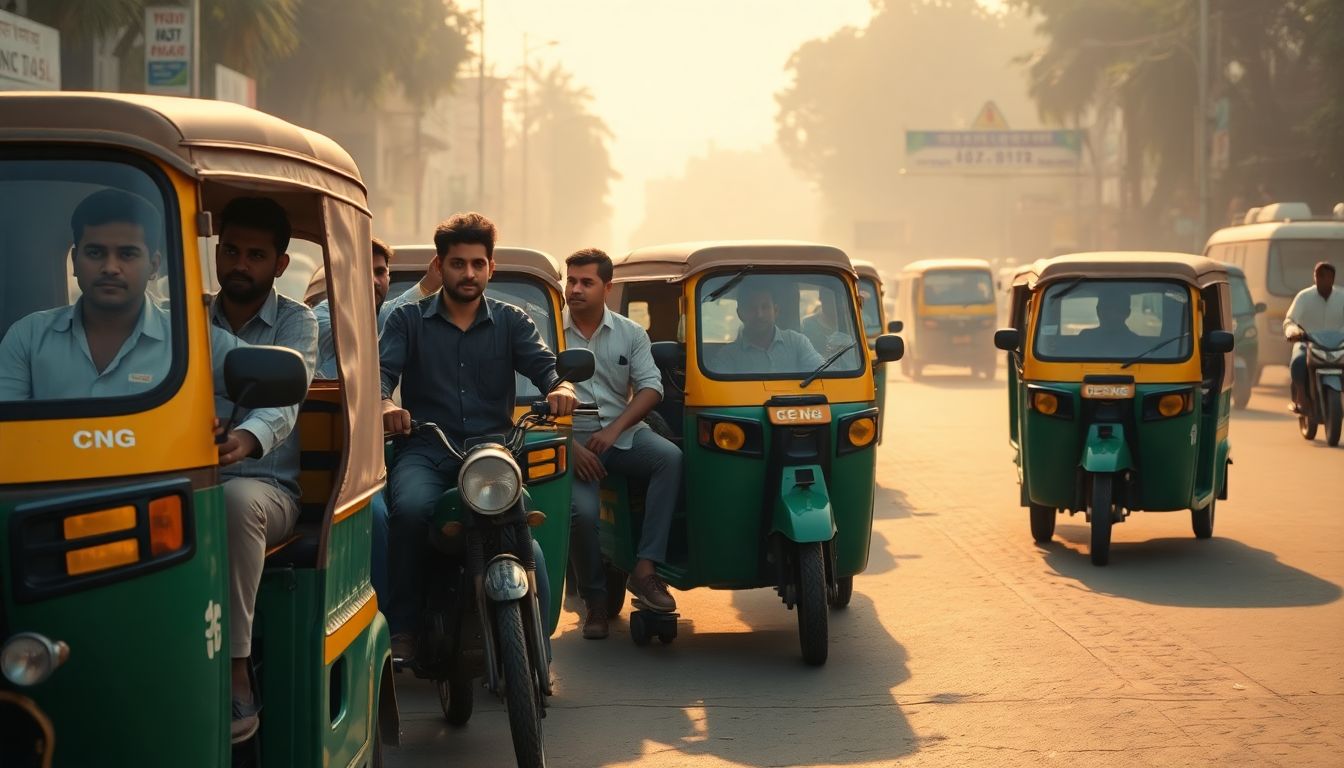
Autorickshaw drivers in Delhi localities including Hauz Khas, Govindpuri, and Sangam Vihar are expressing deep concerns over the Delhi government's mandated transition to electric vehicles (EVs) under the draft EV Policy 2.0. The policy, which has been in the public domain since April 2026, proposes that only electric three-wheelers will be allowed for new registrations starting January 1, 2027.
Drivers fear the shift will lead to a direct loss of income due to inadequate charging infrastructure, limited vehicle range, and high maintenance costs compared to existing CNG vehicles.
Rajesh, who operates an electric three-wheeler in Hauz Khas, highlighted the challenge of managing a 100-kilometre range on a single charge. He noted that unlike CNG autos, which can easily complete long-distance trips and return to pick up more passengers, EV drivers must constantly calculate their remaining battery. He said this makes them hesitant to accept passengers for far-off destinations like Anand Vihar.
Infrastructure limitations also worry drivers. Pawan Kumar, an auto driver from Govindpuri, stated that Delhi's existing infrastructure—consisting of 1,919 charging stations, 2,452 charging points, and 232 battery-swapping stations—is highly insufficient for the city's lakhs of drivers. Kumar added that charging at home is rarely an option because many landlords do not permit it, and local electrical grids cannot support the load.
Maintenance costs present another major hurdle. Moin, who drives in Hauz Khas Village, pointed out that replacing an EV battery costs between ₹60,000 and ₹75,000, while a high-capacity controller costs around ₹30,000. In contrast, engine replacements for CNG autos cost no more than ₹5,000, and they can be repaired by local mechanics rather than exclusive company-authorised centres.
Furthermore, the transition poses a heavy financial burden. Vinod, a driver from Sangam Vihar, is still paying off a ₹9 lakh loan on his eight-year-old CNG auto. While the government's draft policy offers Direct Benefit Transfer incentives up to ₹50,000 and a ₹25,000 scrapping incentive, drivers argue this is not enough to cover the ₹1.5 lakh to ₹4.5 lakh cost of a new electric three-wheeler.