Centre Directs States to Document JJM 2.0 Best Practices and Organise School Tours
The central government in New Delhi has asked all states and Union territories to engage colleges, universities, and academic institutions to document selected case studies and best practices under the Jal Jeevan Mission 2.0.
In a communication issued to additional chief secretaries, principal secretaries, and secretaries handling rural drinking water across the country, the Department of Drinking Water and Sanitation under the Ministry of Jal Shakti outlined the framework for capturing and sharing functional models. The department stated that the studies should focus on village-level models, panchayat-led initiatives, community ownership, functionality of water-supply schemes, and measurable outcomes of mission interventions.
The findings are intended for publication across academic journals, institutional reports, research papers, newsletters, and websites. According to the ministry, building this evidence-based repository will facilitate the replication of successful drinking water models across various districts and states.
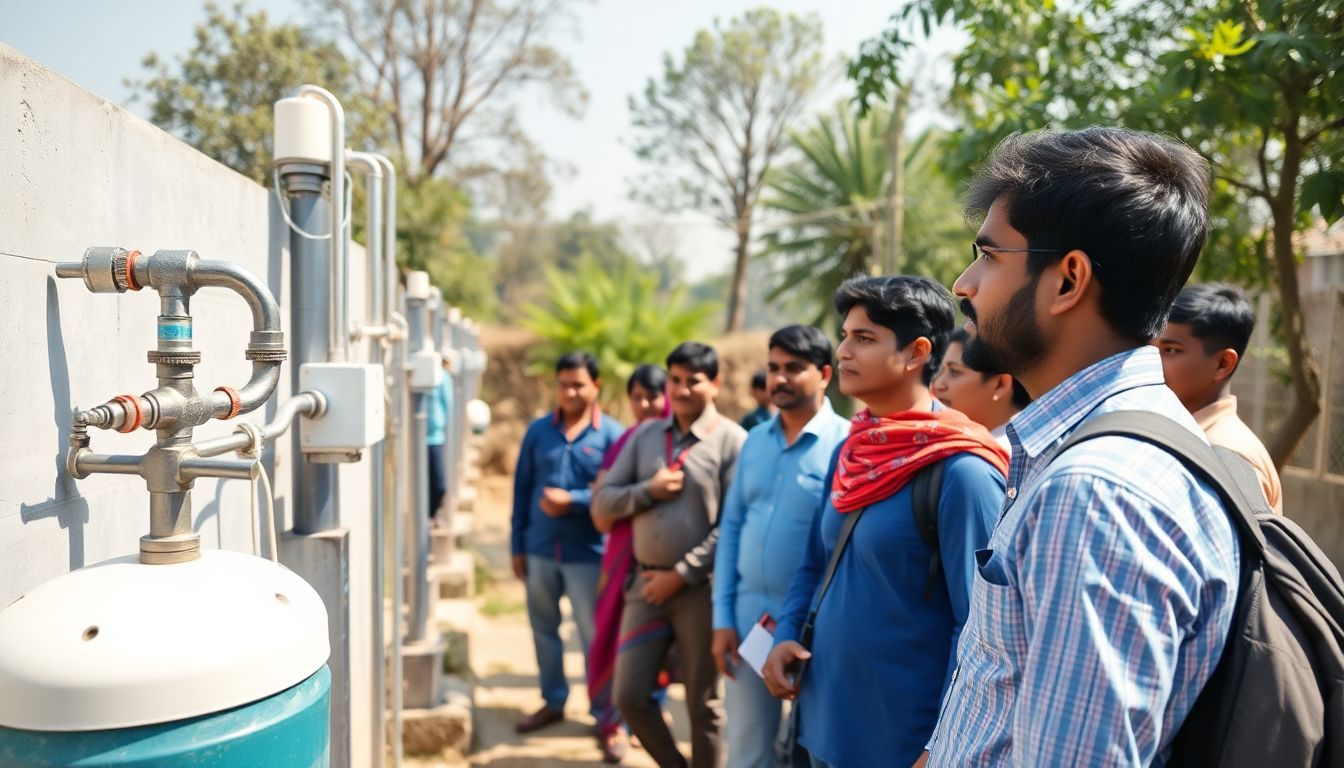
Alongside documentation, the Centre requested states to organise educational visits for higher-secondary and senior-secondary students. These tours will take students to multi-village schemes, intake wells, water-treatment plants, and facilities operating modern systems such as SCADA and Internet of Things (IoT) technologies, as well as NABL-accredited water-testing laboratories.
States have been instructed to identify relevant case studies and field locations while coordinating with local academic institutions, schools, gram panchayats, and district water and sanitation missions. The directive sets a target for each district to conduct at least one student tour and publish at least one collaborative case study or best practice by the end of September.
The Department of Drinking Water and Sanitation noted that the Jal Jeevan Mission has generated effective practices in community participation, source sustainability, water-quality management, operation and maintenance, technology adoption, and decentralised governance. States have also been asked to submit consolidated district-wise reports on these activities.