Wetland Authority Report Reveals 196 Delhi Water Bodies Dried Up and 135 Encroached
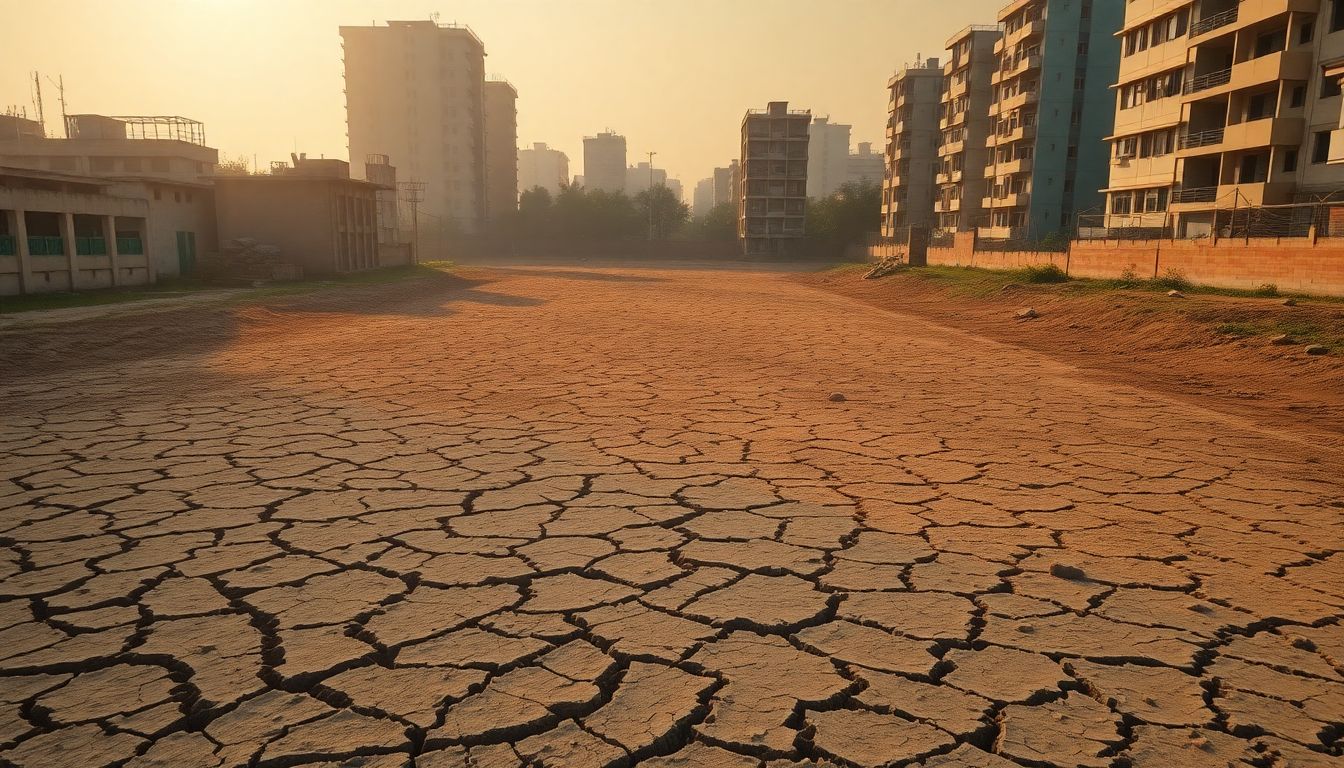
A status report submitted to the National Green Tribunal (NGT) has revealed that out of 1,080 identified water bodies across Delhi, including major concentrations in South West Delhi, at least 196 have dried up and 135 have been encroached upon.
The report, compiled by the Wetland Authority of Delhi (WAD), highlights the severe degradation of the city's lakes, ponds, and wetlands. It also exposes significant data gaps and incomplete reporting by several of the 16 public land-owning agencies tasked with managing these sites.
The Delhi Development Authority (DDA) holds the largest share of the city's water bodies, managing 856 sites. Of these, 181 have dried up and 126 are encroached. Furthermore, water quality data was available for only 108 of the DDA's sites, with 95 classified as having poor water quality, two as moderate, and only 11 as good.
The status report was submitted after the NGT directed all land-owning agencies to furnish details of the water bodies under their jurisdiction. However, WAD noted that the inventory remains incomplete. Several agencies submitted entries lacking details on encroachments, water quality, or current land use. For instance, the Delhi Jal Board reported having six water bodies but provided details for only one.
Other public agencies also reported degraded sites. The revenue department, which manages 130 water bodies, reported six dried-up and three encroached sites. The forest department reported two dried-up and one encroached water body out of its 28 sites. The Municipal Corporation of Delhi (MCD) stated that while none of its 24 water bodies are encroached, 22 receive untreated sewage and four have dried up.
The Archaeological Survey of India (ASI) reported that two of its 16 water bodies have dried up and are encroached, though 14 are well preserved. The ASI also noted that the demarcation of two historic baolis in Tughlakabad is currently underway.
Geographically, South West Delhi has the highest concentration of water bodies with 291, followed by Outer North with 266 and South Delhi with 156. In contrast, the Central district has only 14, New Delhi has five, and Old Delhi has four.
Water conservation activist Diwan Singh noted that inadequate stormwater recharge remains one of the biggest threats to these sites. He stated that stormwater drains are not connected to most water bodies, preventing them from replenishing naturally, while ongoing sewage inflows and unaddressed encroachments make restoration difficult without sustained administrative action.