Yamuna water level falls in Delhi as froth is spotted near Kalindi Kunj
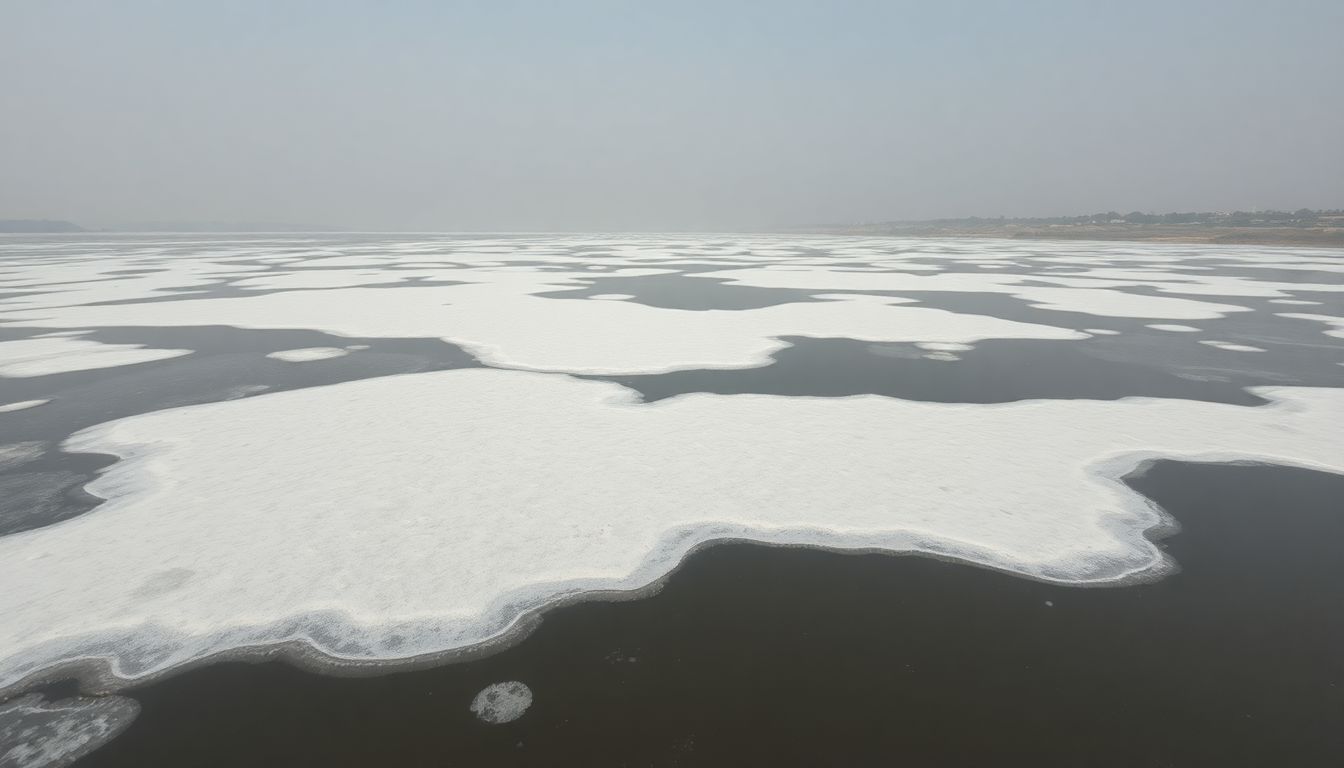
The water level of the Yamuna river in Delhi started receding on Monday after rising steadily for three days, bringing relief as the Central Water Commission (CWC) confirmed there is no flood threat for the capital. While the water level at the Delhi Railway Bridge fell well below the warning mark, thick patches of froth were observed floating on the river's surface near Kalindi Kunj on Monday evening.
According to data from the CWC’s flood monitoring station at the Delhi Railway Bridge, the river’s level stood at 202.57 metres at 6:00 p.m. on Monday. This marked a notable drop from the 204.05 metres recorded at 11:00 a.m. on Sunday. The warning level at the station is 204.50 metres, while the danger mark is 205.33 metres. The highest flood level recorded at the site remains 208.66 metres, which was reached during the severe floods of July 2023.
The recent three-day rise in the river's level was triggered by heavy rainfall across the Yamuna catchment areas in Uttarakhand and Himachal Pradesh. The precipitation led to increased water releases from upstream barrages, raising inflows into Delhi, though the river remained below the warning level throughout this period.
The CWC's latest flood advisory indicated that the river level is expected to fluctuate only marginally over the next seven days, with a maximum projected rise of 0.05 metres. Officials stated that the river will remain below the warning level during this forecast period, and there is no possibility of flooding around the Delhi Railway Bridge.
"The river is showing a falling trend and the present water level is well below the warning level. Based on the current forecast, there is no flood situation in Delhi and no flood warning has been issued," a CWC official said.
Despite the receding water levels, environmental concerns persisted as thick patches of froth accumulated near Kalindi Kunj. This phenomenon, which is frequently observed after the monsoon season, is caused by untreated sewage, industrial effluents, and the churning of water containing high concentrations of pollutants and phosphates.