Delhi Police probe murder of DU professor Debosmita Paul in Vasundhara Enclave
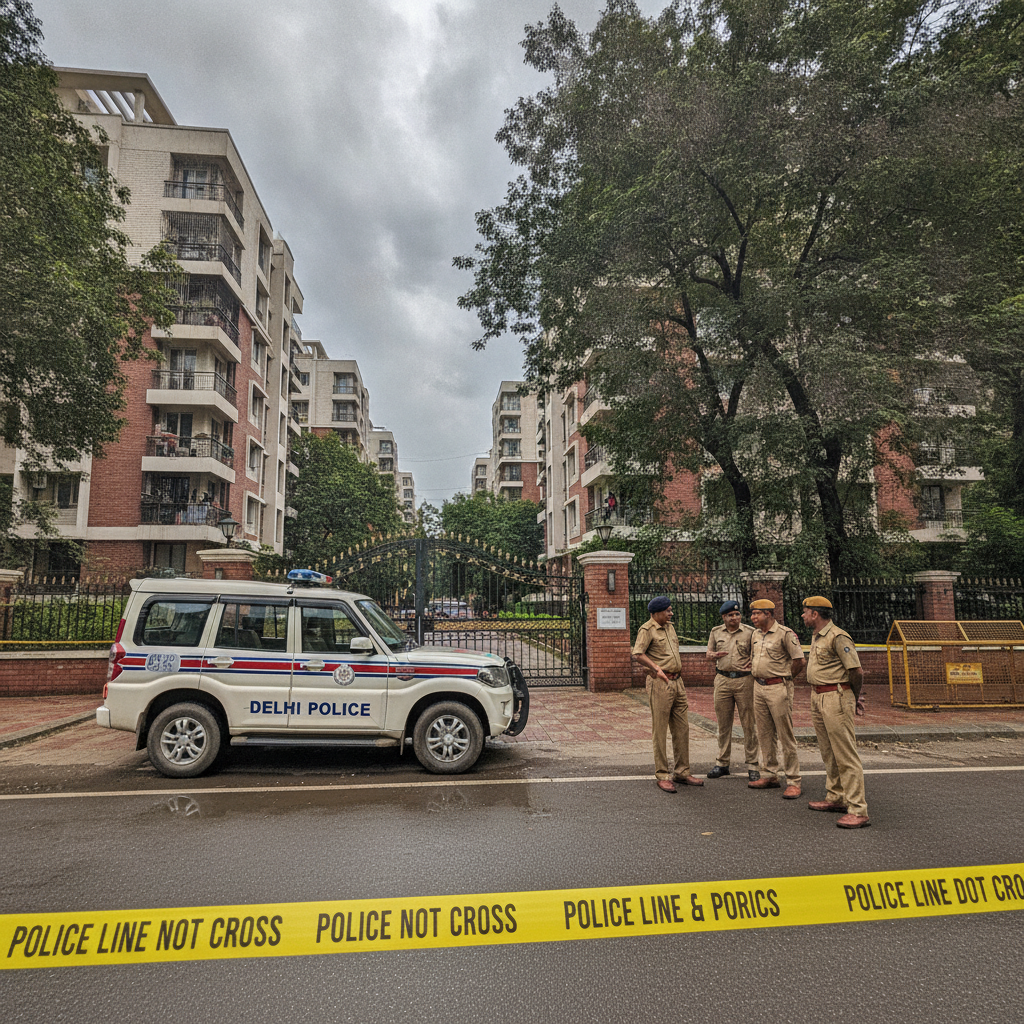
Delhi Police are investigating the murder of Debosmita Paul, an assistant professor at a Delhi University college, after she was found dead in her home in east Delhi's Vasundhara Enclave. Investigators are currently trying to trace two unidentified individuals with covered faces who were spotted at her residential complex around the suspected time of the crime.
The victim, described by neighbours as a reserved person who kept to herself, had not reported to work since Tuesday. She last spoke with her mother over the phone at approximately 1:00 PM on Wednesday. Police suspect she was killed between 3:00 PM and 6:00 PM that same day.
The crime was discovered on Thursday afternoon. Paul's driver arrived at the housing society at 9:30 AM and found her apartment locked from the outside. When his phone calls went unanswered, he contacted Paul's sister. The sister subsequently alerted the police at around 2:30 PM.
To reconstruct the events, investigators reviewed footage from more than 100 CCTV cameras and examined the society's visitor log. They identified 180 people who were present in the area during the suspected timeframe of the murder. By Friday evening, police had cleared 167 of those individuals, leaving 13 people under active scrutiny, including the two masked suspects.
The two masked individuals, a man and a woman, were recorded walking one behind the other and exiting the Vasundhara Enclave residential premises separately, about 30 minutes apart, on Wednesday. Investigators are working to confirm if either person entered Paul's home.
Additionally, police are scrutinising delivery boys from e-commerce platforms who regularly visit the society, alongside several domestic workers and their associates. Investigators have also seized glasses and kitchen utensils from the apartment, sending them for forensic and DNA analysis.
During the probe, officers identified security lapses within the housing complex. Some areas lacked CCTV coverage entirely. Furthermore, the visitor-entry system had gaps, as guards did not always log details if residents directly authorized entry.