Delhi Pedestrians Forced Onto Roads As Two-Wheelers Take Over Footpaths
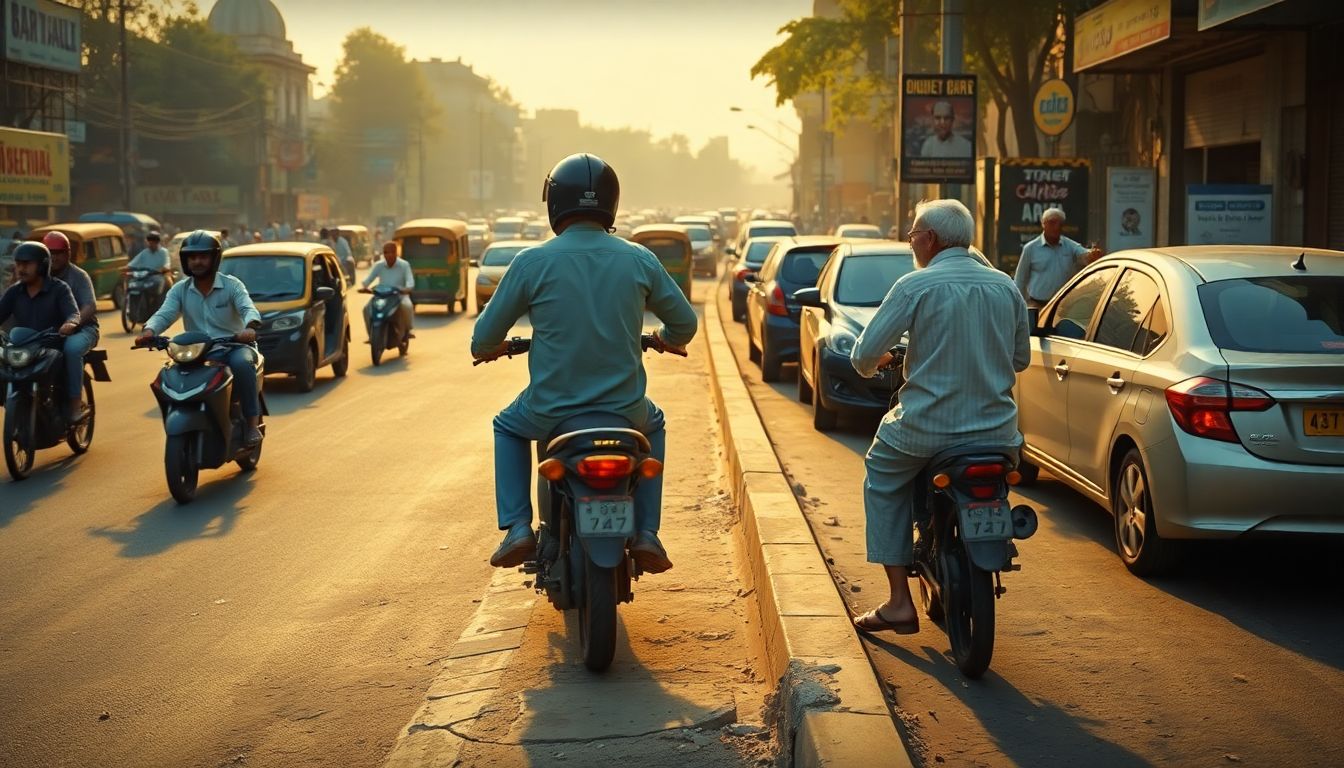
In Delhi, two-wheelers and delivery riders are increasingly using footpaths as informal traffic lanes, forcing pedestrians off pavements and onto busy roads. This ongoing daily occurrence has created severe safety hazards, particularly outside metro stations, schools, and crowded markets, where walkers are forced to trade one danger for another.
The daily invasion of footpaths disproportionately impacts vulnerable groups, including the elderly, children, and the disabled. Elderly pedestrians face the risk of being startled by silent electric scooters approaching from behind, which can lead to falls. Children, who move unpredictably, are highly vulnerable to injuries from low-speed crashes, while wheelchair users and the visually impaired find their journeys increasingly hazardous.
The rise in footpath violations is largely driven by the growing app-based delivery economy. Food delivery, grocery apps, and quick-commerce platforms rely on hundreds of thousands of riders who are paid per delivery rather than per hour. This payment structure creates constant pressure to shave off minutes, incentivizing riders to use footpaths as shortcuts when roads are choked with traffic.
Urban design and weak enforcement compound the problem. Broken kerbs, wide property-entry ramps, and an absence of bollards make it easy for motorized vehicles to slip onto pavements. Meanwhile, traffic police enforcement remains patchy, and the lack of a dedicated system to track repeat offenders means that violations rarely result in penalties.
While India’s Motor Vehicles Act officially bans vehicles from driving on footpaths, the rules remain largely symbolic on the ground. The trend has also begun to discourage walking, prompting some residents to shift to private vehicles for short journeys, which ultimately worsens city congestion and emissions.
Footpaths were designed to separate slow-moving pedestrians from fast, heavier traffic, but this divide has disappeared. Delivery riders regularly zip along pavements, and two-wheelers dart through pedestrian crossings to beat red lights. Many riders operate under the assumption that an empty footpath is fair game, ignoring the basic rule that pedestrians have absolute precedence.
Addressing the issue will require a combination of physical engineering—such as installing bollards and narrow entry points—and technological solutions. Delivery platforms could also use GPS data to flag risky routing patterns and relieve unrealistic delivery-time pressures to help resolve the crisis.