Over 50,000 Protesters Clash With Police Near Jantar Mantar and Parliament
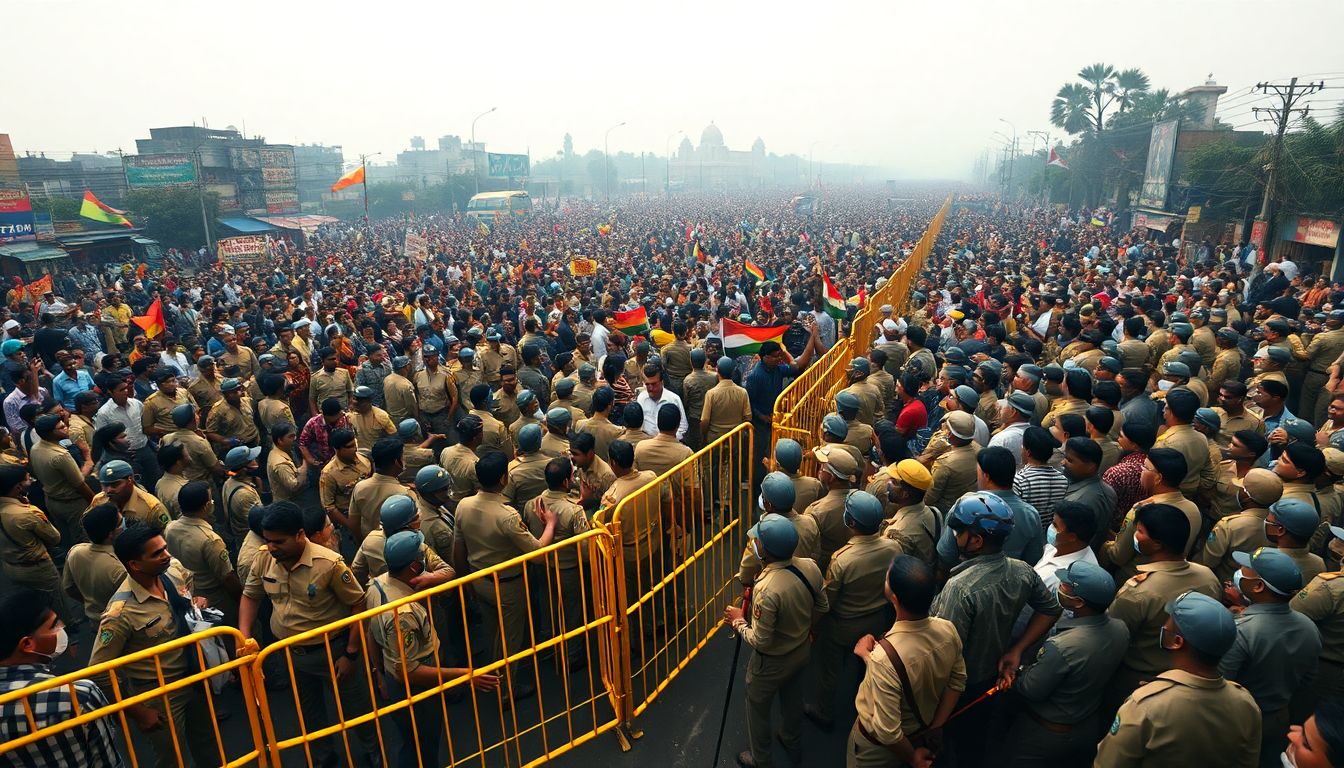
Security forces struggled to contain over 50,000 protesters who marched near Jantar Mantar and Parliament in Delhi on Sunday and Monday, leading to violent clashes after authorities severely underestimated the crowd's size. The turnout for the CJP protest was more than six times the maximum estimate of 8,000 projected by intelligence units, causing security containment struggles during Parliament's ongoing Monsoon Session.
The Jantar Mantar area designated for the protest has a capacity to accommodate around 3,000 people. However, by Sunday evening, nearly 5,000 people from Delhi and across the country had gathered at the site. While the Delhi Police Intelligence Department estimated the Monday morning turnout would reach 7,000 to 8,000 people, the actual crowd size across the city swelled to 50,000 or more.
The protest had previously failed to gather momentum for more than three weeks, with daily turnout at Jantar Mantar remaining between 100 and 500 people. However, momentum surged after police moved activist Sonam Wangchuk to Safdarjung Hospital on July 18, following the hunger strike he began on June 28.
Expecting a maximum of 8,000 protesters, the Delhi Police had deployed nearly 2,000 personnel and 32 companies of paramilitary forces. Late Sunday night, security forces set up multilayered barricades at all four entry points to Jantar Mantar, as well as on Parliament Street, Raisina Road, and Dr Rajendra Prasad Road.
By Monday morning, nearly 15,000 people had gathered at Jantar Mantar alone. In response, the Delhi Police Headquarters sent urgent messages to all 14 districts, directing each to immediately send one Assistant Commissioner of Police (ACP) and 100 personnel to the site. Two Joint Commissioners of Police were also deployed to oversee the security operation.
Deputy Commissioner of Police (New Delhi) Sachin Sharma attempted to negotiate a compromise with protest organisers Ashutosh Ranka and Saurav Das to allow a limited march. After three rounds of failed negotiations, police warned the organisers that the situation could spiral out of control. Despite repeated public announcements from the organisers urging the crowd to remain peaceful, violence broke out.
Protesters threw shoes, bottles, stones, and bushes at the police, while security forces responded with tear gas shells and baton charges. Police personnel carried out lathi charges to disperse the crowd, but protesters repeatedly regrouped and charged back, resulting in ongoing confrontations throughout the day.