NGMA Launches First Dedicated Printmaking Studio in New Delhi
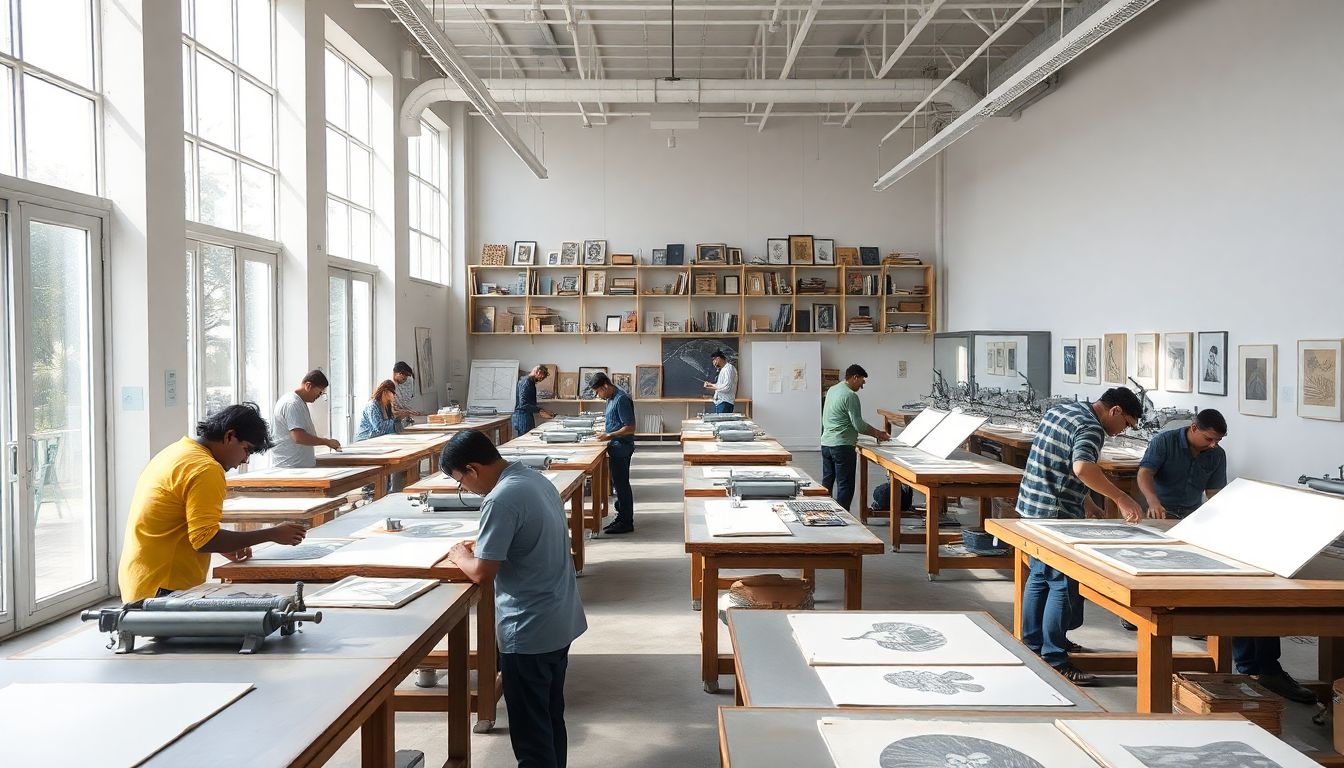
The National Gallery of Modern Art (NGMA) in New Delhi activated its first-ever dedicated printmaking studio over the weekend, concluding its inaugural workshop, 'Chhapankan', on Saturday. Under the leadership of Director General Dr Sanjeev Kishor Goutam, the new space brings the intricate, patient, and hands-on art of etching and printmaking to life in a permanent gallery setting.
During a weekend afternoon at the gallery, artists from across the country gathered to work in the newly activated studio. The space was filled with the smell of ink and metal as creators engaged in the traditional, multi-step process of carving and pressing.
Artist Rm. Palaniappan demonstrated the meticulous nature of the craft, using a fine needle to cut lines into a darkened zinc plate. The plate was then lowered into a shallow bath of nitric acid, which bit into the exposed lines to create permanent grooves.
Nearby, artist Hanuman Kambli operated the studio's printing press. He placed an inked plate on the bed, laid a sheet of damp paper over it, covered it with felt, and turned the wheel to press the image out of the metal. Other participating artists, including NG Bagodi Vijay, discussed advanced techniques such as burning resin to build texture.
The studio features a custom-built press modelled on a rare machine from Visva-Bharati University. According to Goutam, the space is designed for both the revival and reinvention of the medium. He noted that printmaking represents a philosophy of multiplicity, accessibility, and experimentation.
Looking ahead, the NGMA plans to expand the studio's reach. Goutam announced that the gallery will launch a three-month programme for art enthusiasts and explore future collaborations with both Indian and international artists.
Artist Ananda Moy Banerji described the printmaking process as a quiet dialogue between the artist and the material, where lines are drawn through resistance, bitten by acid, filled with ink, and finally pressed into paper.