Navjeevan Vihar residents process 10 lakh kg of waste locally over eight years
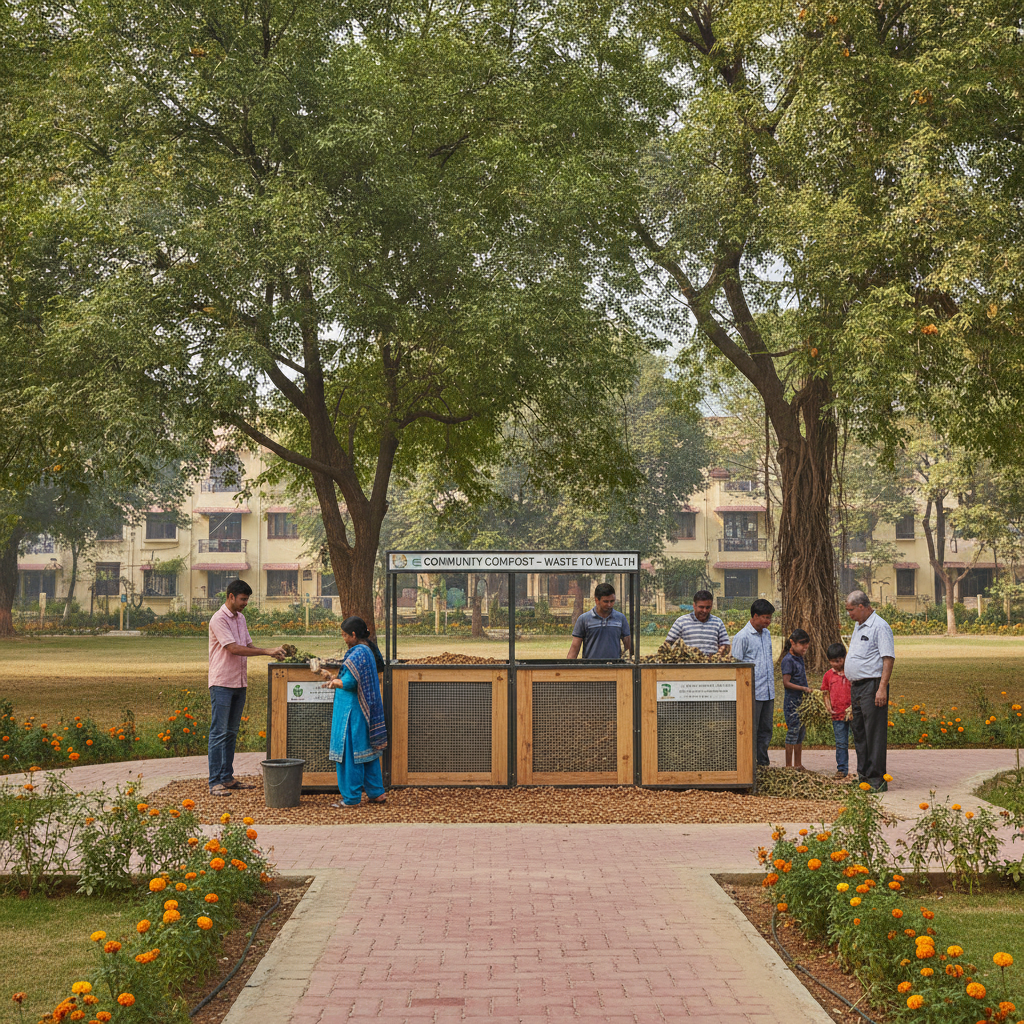
Residents of Navjeevan Vihar in Delhi have successfully processed and diverted over 10 lakh kilograms of waste from the city's overflowing landfills over the past eight years. The local initiative, which took shape after discussions in 2017 and formally launched in 2019, has turned the residential colony of 280 households into a self-sustaining, zero-waste community.
The project was initiated by Dr Ruby Makhija, who became the secretary of the Navjeevan Vihar Residents' Welfare Association (RWA) after her car was stolen in February 2017. Following consultations with the Municipal Corporation of Delhi (MCD) regarding Solid Waste Management rules, Makhija and the RWA decided to address the colony's waste footprint.
Funding for the project was sourced from the RWA’s maintenance pool, where 95 percent of residents pay an annual fee of Rs 1,200 upfront. The RWA spent Rs 6 lakh four years ago to purchase compost bins, which included one year of consumables.
Under the system, residents segregate waste at the source into wet, dry, and hazardous categories. Wet waste is composted within the colony and reused in local green spaces. Dry waste is stored at a Reduce-Reuse-Recycle (RRR) centre before being sent for recycling. Today, the colony generates between 250 and 275 kilograms of waste daily, comprising 120 to 125 kilograms of wet waste and 105 to 110 kilograms of dry waste, with the remainder being sanitary and hazardous waste.
The initiative faced initial behavioral hurdles, with inconsistent segregation among some residents. To address this, the RWA identified non-compliant residents in colony groups and engaged local children as waste management ambassadors. The RWA also incentivized domestic workers by distributing biodegradable sanitary napkins and allowed garbage collectors to keep earnings from recyclable dry waste. Additionally, the colony shifted to enclosed composting units after early compost pits created odour complaints.
Following a visit by Delhi Lieutenant Governor Taranjit Singh Sandhu, officials are now discussing the Navjeevan Vihar model as a potential blueprint to be implemented in other parts of the city.