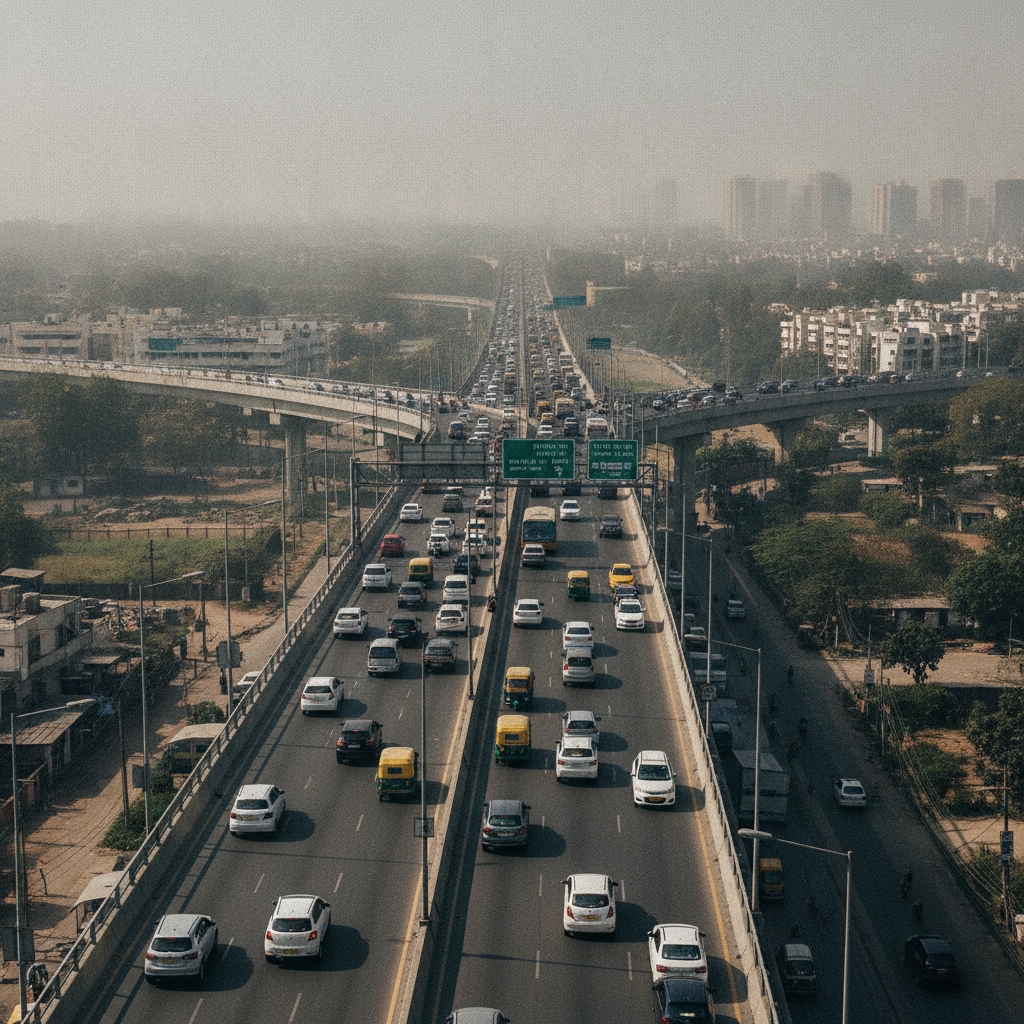
Gurugram mobility report highlights severe lack of safe pedestrian footpaths
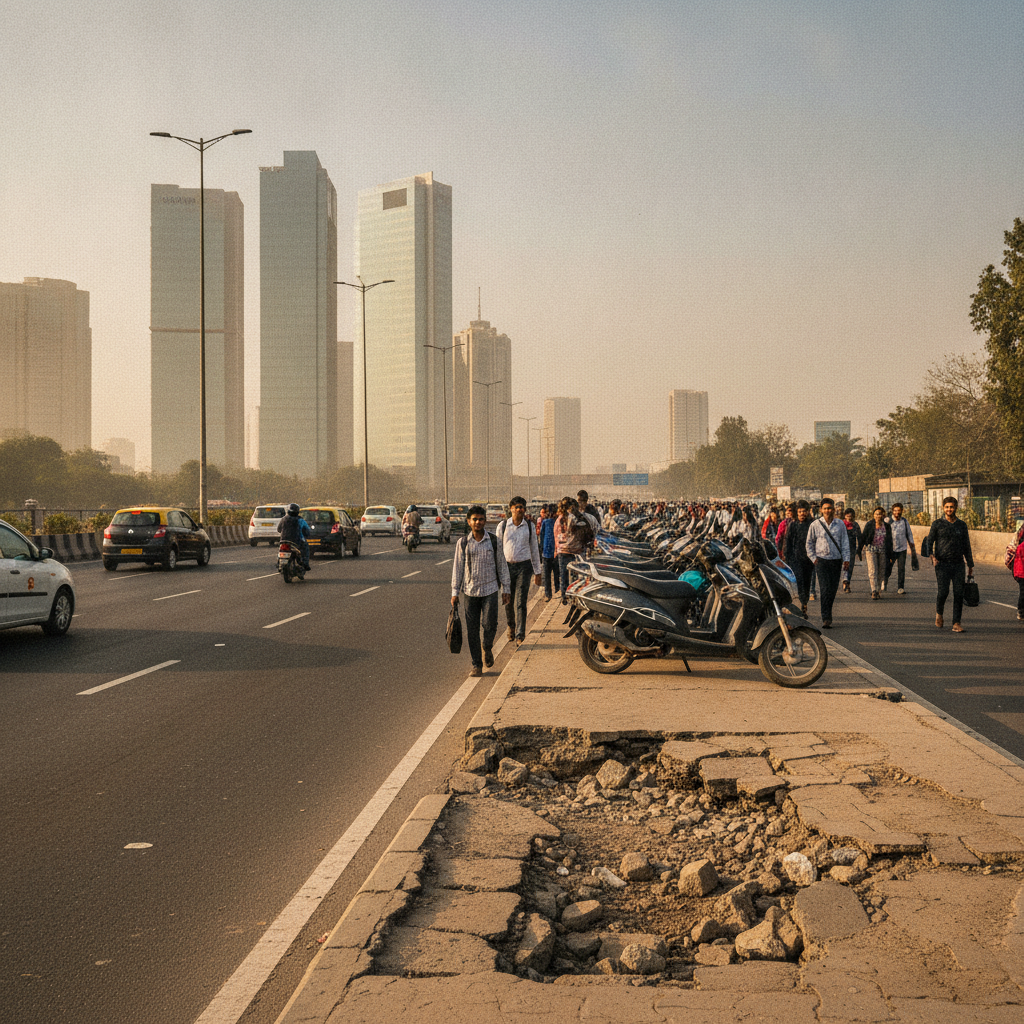
A comprehensive mobility assessment has revealed that pedestrian facilities and safe road-crossing mechanisms are grossly inadequate across Gurugram, leaving walkers highly vulnerable to safety risks. The assessment highlighted that while some baseline footpaths exist in areas like MG Road and HUDA City Centre, they are frequently blocked by parked vehicles and vendors, forcing residents to walk on dangerous roads.
The Comprehensive Mobility Management Plan (CMMP), prepared for the Gurugram Metropolitan Development Authority (GMDA), revealed that walking accounts for a massive 33 percent of all daily intra-city trips. Despite this high reliance on walking, the city’s average Walkability Index—which measures safety, convenience, and policy support—stands at a dismal 0.68 out of 5.
According to the CMMP, only 28 percent of the city’s total road network was covered by footpaths before recent interventions began. This amounts to a mere 153.6 kilometers of pathways, which are primarily concentrated in the inner core area and parts of New (East) Gurgaon, such as Hamilton Court Road.
In contrast, outlying pockets of the city are facing even harsher conditions. Areas like Badshahpur and the sectors located beyond the Dwarka Expressway are reportedly completely devoid of footpaths. Furthermore, active infrastructure is often poorly maintained, as seen with a dug-up footpath outside Vyapar Kendra.
To address these safety hazards, the Transport Planning Department of the School of Planning & Architecture, Delhi, conducted an analysis identifying 800 kilometers of the city's road network that currently lacks essential pedestrian infrastructure.
In response, local authorities have laid out an ambitious, multi-phased roadmap to bridge the gap. The target is to develop a total city-wide footpath network of 1,083 kilometers by 2041. This plan involves building new pathways along the deficient 800-kilometer stretch and upgrading the existing 153.6 kilometers to ensure complete coverage of the primary road network.
The issue has gained renewed urgency following a recent Supreme Court ruling, which declared that the right to walk safely on well-demarcated footpaths is a fundamental right. The top court ruled that pedestrian rights must take priority over motorized vehicles on demarcated paths under Article 19 (1) (d) and Article 21 of the Constitution.