Delhi PWD trials new technology to repair Central Delhi potholes in under five minutes
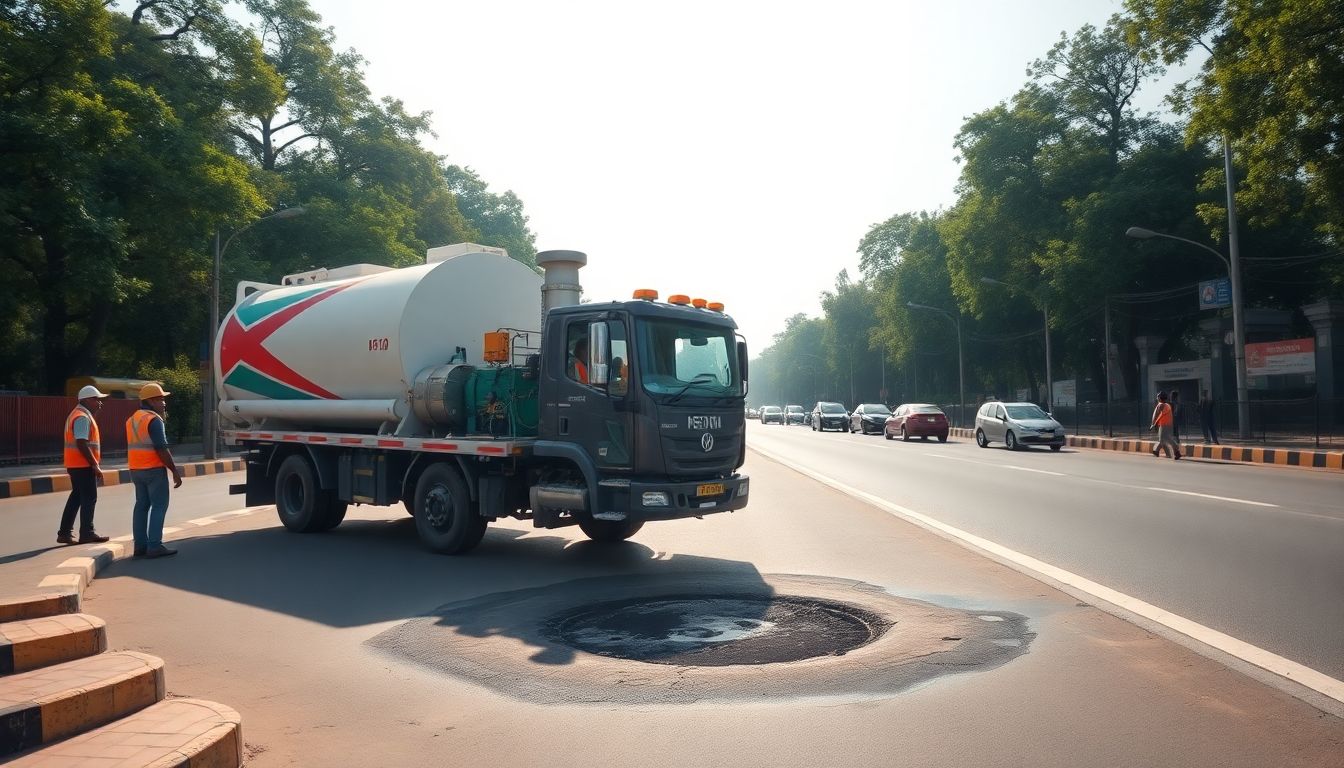
On Tuesday, the Delhi Public Works Department (PWD) launched trials of a new "Spray, Injection, Patching" technology in Central Delhi to repair potholes in under five minutes. PWD Minister Parvesh Sahib Singh witnessed the trial of the fully mechanized, single-machine method, which aims to provide faster, more durable, and all-weather road maintenance.
According to officials, the innovative technology allows a single machine and a small crew to repair between 100 and 150 potholes per day. This mobile, self-contained operation is designed to minimize commuter inconvenience by eliminating the need for lane closures or rolling compaction.
The repair process begins with the machine cleaning the pothole using high-velocity air. A bonding coat of bitumen emulsion is then applied, followed by the injection of emulsion-coated aggregate under high pressure. The velocity of the injection achieves the necessary compaction automatically, removing the need for rollers.
Officials stated that each pothole can be repaired in two to five minutes, and the road can be reopened to traffic immediately after the repair. Unlike conventional cold mix patches that often last only a few weeks, this new method creates a durable bond with the pothole walls, allowing repairs to last for several years.
The cold-applied process is also environmentally friendly, as it does not require hot mix plant operations. This reduces fuel consumption and emissions while ensuring zero material wastage, as only the required quantity is mixed and sprayed. Additionally, the technology enables road repairs during the monsoon season, when conventional methods are difficult to execute.
Minister Parvesh Sahib Singh stated that the government will explore wider adoption of this method based on the trial results to strengthen Delhi's road maintenance system. He emphasized the government's focus on embracing modern technologies to deliver better roads and a smoother travel experience.
The technology can be used to repair deep potholes, edge breaks, utility cuts, and wide cracks. It has already been adopted by road agencies in several Indian states, including Jammu and Kashmir, Haryana, Maharashtra, Madhya Pradesh, Goa, Karnataka, and Telangana.