Delhi Court Reserves Sentence Order for Tahir Hussain in Ankit Sharma Murder Case
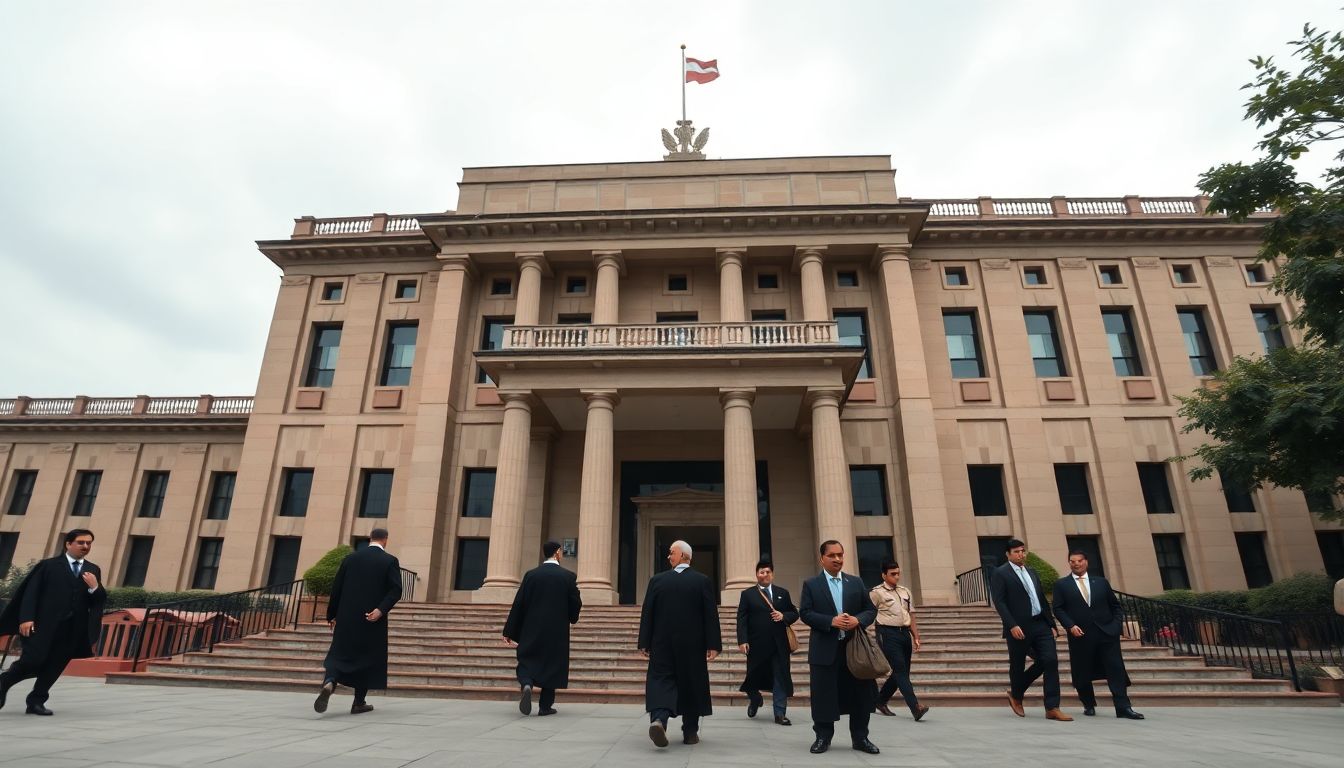
A Delhi court on Monday reserved its order for July 31 on the quantum of sentence for former AAP councillor Tahir Hussain and four others convicted for the murder of Intelligence Bureau officer Ankit Sharma during the 2020 Delhi riots. Additional Sessions Judge Praveen Singh reserved the decision after hearing arguments on the punishment, following the prosecution's demand for the death penalty and strong opposition from defence counsel.
During the hearing, Special Public Prosecutor Madhukar Pandey sought the death penalty for all five convicts, arguing that the crime was cold-blooded and extraordinarily brutal. Pandey informed the court that Sharma was abducted, relentlessly assaulted, and tortured even after his death. A total of 51 wounds were discovered on Sharma's body, including 18 inflicted by sharp weapons, before his body was recovered from a drain without any clothing except underwear.
The prosecution emphasized that no leniency should be granted, noting that Sharma had not provoked the accused. Pandey argued that the murder must be viewed in the context of the broader 2020 riots in which 53 people died. He submitted that the convicts had participated in a savage assault while forming part of a heavily armed mob, asserting that those who showed no mercy during the violence should not be entitled to seek mercy from the court.
Opposing the demand for capital punishment, advocates Rajiv Mohan and Tara Narula, representing Hussain, argued that the death penalty should be awarded only in the rarest of rare cases. Mohan highlighted that out of 11 accused in the case, six had been acquitted after the court examined 91 witnesses. He argued that the judgment did not establish a specific role for Hussain and noted that there was no evidence of a criminal conspiracy under IPC Section 120B.
The defence also cited Hussain’s good conduct while in jail custody and argued that a single individual could not be held responsible for the actions of a violent mob that police themselves were unable to control. Advocate Narula added that Hussain was the sole breadwinner for his family, which includes his wife and three children who were minors when he surrendered, maintaining that he should be given an opportunity to reform.
Hussain and his four co-convicts were convicted on July 13 for Sharma's murder. The court found Hussain guilty under IPC Sections 302 for murder, 365 for kidnapping, 147 and 148 for rioting, 153A for promoting enmity, and 188 for disobeying a public servant's order, all read with Section 149 for unlawful assembly.