Delhi approves Rs 12,000 crore Ring Road project with new bridges to connect Noida

The Delhi government has approved the first phase of a Rs 12,000 crore elevated Ring Road corridor project, which will construct two new bridges over the Yamuna River and establish a high-speed connection linking North Delhi to Noida and Ghaziabad via the DND flyway. Reported on June 19, 2026, the project aims to ease traffic congestion, reduce regional travel times, and provide signal-free movement across the National Capital Region.
Public Works Department (PWD) Minister Parvesh Sahib Singh confirmed that the feasibility and detailed project report (DPR) for Phase 1 has been prepared and is currently under review. The plan will soon be submitted to the Unified Traffic and Transportation Infrastructure (Planning & Engineering) Centre (UTTIPEC) for final approval.
The first phase of the project spans a 25-kilometer-long corridor divided into three priority sections. These include a 7-kilometer stretch from Azadpur Chowk to the Metcalfe House junction, a 5-kilometer section from Majnu Ka Tila to Salimgarh Fort, and a final section from Salimgarh Fort to the DND flyway near Ashram.
The project features two new bridges over the Yamuna River, constructed between the Metcalfe House junction and Salimgarh Fort. One bridge will be built near the Old Iron Bridge (Lohe ka Pul) as a replacement, aimed at reducing traffic congestion on the existing ITO bridge and Yudhister Setu. This bridge will directly link North East, East, and South East Delhi to the DND flyway near Ashram.
The second bridge will be constructed at Chandgiram Akhara near Metcalfe House. It will cross the Yamuna River to connect with North East Delhi, ITO, and Mayur Vihar. This stretch will also feature an interchange with the Delhi-Dehradun Expressway, connecting North Delhi, Noida, and Ghaziabad to enhance regional mobility.
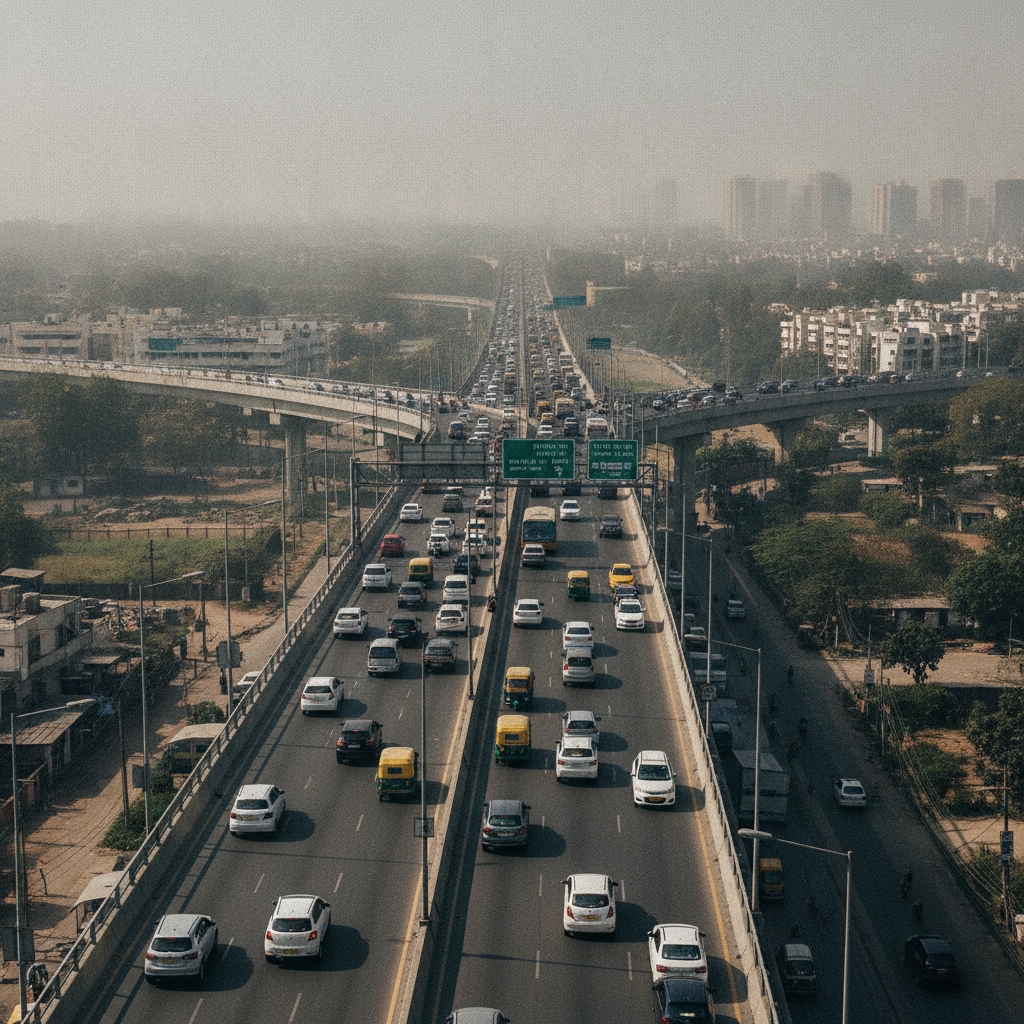
According to officials, the Ring Road, also known as Mahatma Gandhi Marg, currently carries a daily load of 5 lakh vehicles. The average vehicular speed during peak hours is 23.79 kmph, which the new elevated corridor is expected to increase to 45 kmph.
The overall Ring Road corridor is planned to be constructed in six sections across two phases. When ramps, loops, and additional connecting roads are completed, the total length of the corridor will reach approximately 80 kilometers.