Zakhira and Sultanpuri Residents Struggle With Dry Taps and Contaminated Water
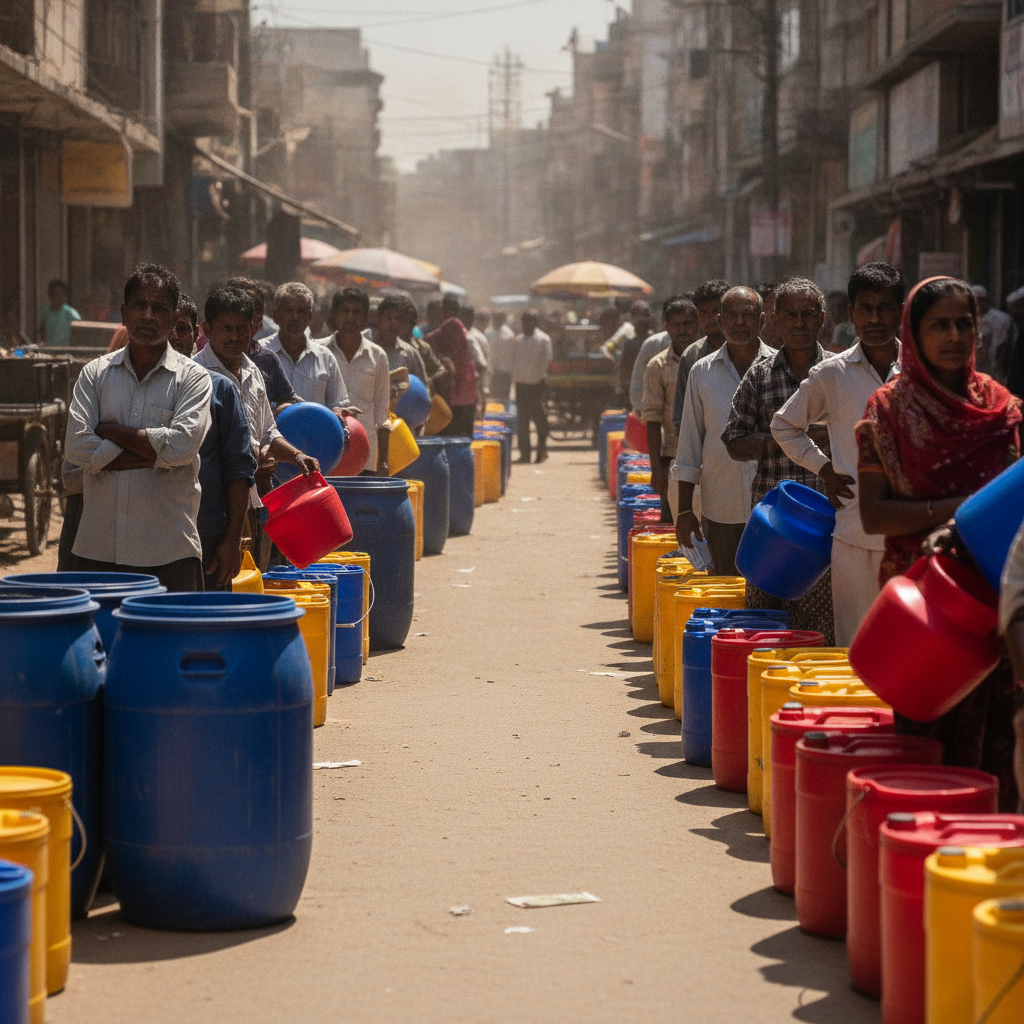
Residents in the Delhi neighbourhoods of Amar Park in Zakhira and Sultanpuri are facing a severe water crisis, with households experiencing completely dry taps or receiving highly contaminated, foul-smelling water. The ongoing shortage has been compounded by reduced production at key Delhi Jal Board (DJB) water treatment plants, leaving local families struggling to secure clean water for their daily needs.
In Northwest Delhi's Amar Park, Zakhira, rows of plastic drums and buckets have become a common sight along the roadside as residents wait for DJB water tankers. The local crisis is mirrored a few kilometres away in West Delhi's Sultanpuri, where residents have reported similar disruptions.
According to Iqbal Chaudhary, a 30-year-old resident of W Block in Sultanpuri, the pipeline water supply in his area has been completely stopped for nearly two years. Chaudhary stated that approximately 500 people, including those at a nearby mosque, depend on the supply.
"We get only one or two tankers in a week," Chaudhary said, noting that the high demand means residents cannot even get five litres of water per person.
In addition to the shortage, the quality of the water that does occasionally flow has raised serious health concerns. Residents reported that the water is dark and foul-smelling. Chaudhary noted that taps had been dry for six months, and the occasional flow is highly contaminated, describing it as black, sewage-mixed water with an unbearable smell. Another Sultanpuri resident echoed these concerns, stating that nobody has looked into the ongoing shortage.
The affected areas fall primarily under the supply zone of the Chandrawal Water Treatment Plant, which serves large parts of Central-West Delhi, and also receive support from the Wazirabad network. DJB officials attributed the widespread supply disruptions to low raw water levels in the Yamuna River, which has forced both the Chandrawal and Wazirabad plants to operate below capacity.
In response to the growing complaints from local residents, DJB officials stated that they have collected water samples from the affected localities and sent them for laboratory testing.