
PWD Approves Rs 2 Crore Feasibility Study for Aruna Asaf Ali Marg Elevated Road
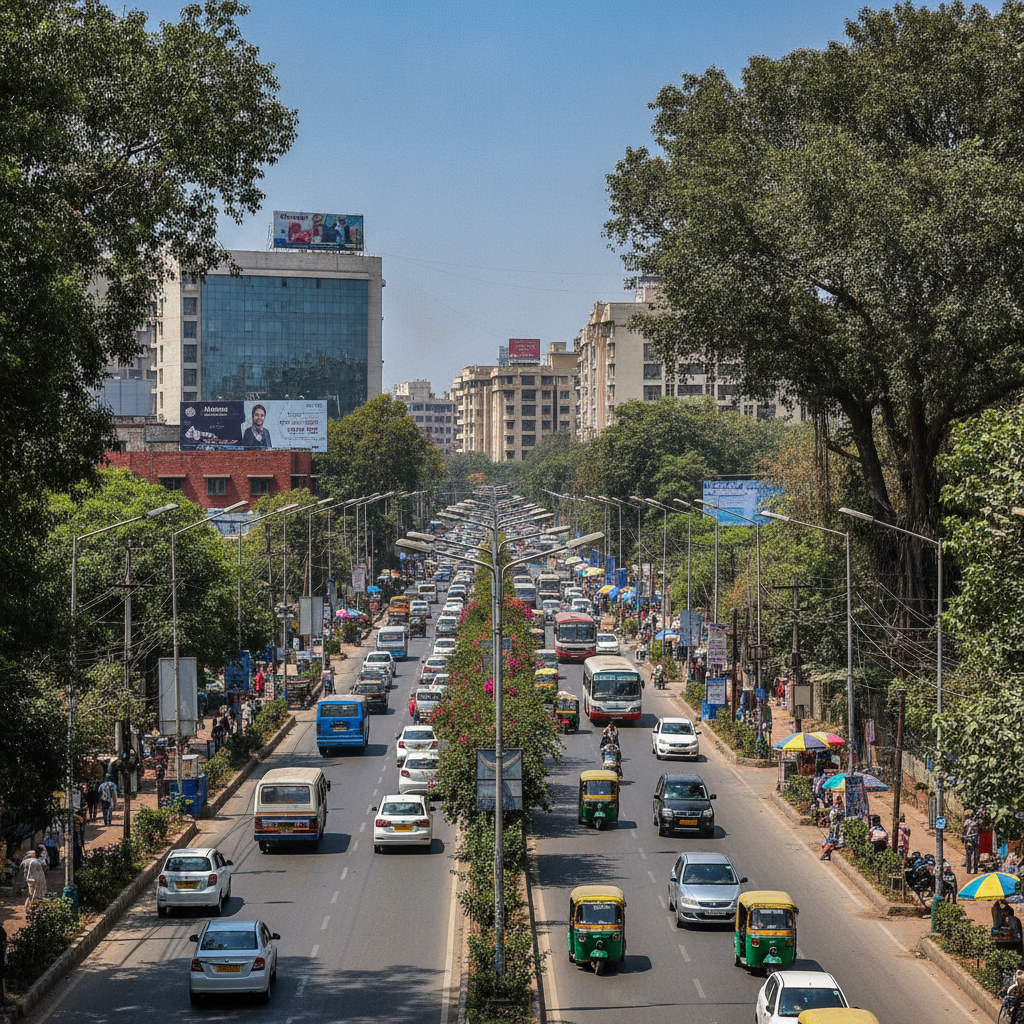
The Public Works Department (PWD) on July 20 approved a budget of nearly Rs 2 crore for a detailed feasibility study to evaluate building a proposed 5.5 to 6 km elevated corridor along Aruna Asaf Ali Marg in South Delhi. The planned elevated road extends from Kishangarh village near Vasant Kunj to the IIT flyover located at the Outer Ring Road-Aurobindo Marg junction.
The move comes after an initial decision taken during a meeting on March 10, which was chaired by the Secretary to the Chief Minister. At that meeting, the PWD was directed to engage a professional consultant to conduct feasibility studies for elevated corridors across South Delhi to tackle severe traffic congestion.
Aruna Asaf Ali Marg is a crucial arterial route that connects Mahipalpur and Mehrauli with the Outer Ring Road. In its present state, the corridor experiences persistent traffic congestion and heavy delays, particularly during peak commuting hours, owing to heavy traffic volumes, multiple intersections, and continuous local movement.
Along its route, the proposed elevated corridor passes key educational institutions and landmarks, including Jawaharlal Nehru University (JNU), Vasant Kunj, and the ICSSR campus. Officials noted that the main objective of the proposed structure is to segregate local movement from through traffic, offering substantial relief to the surrounding road networks.
Civic officials highlighted several major bottlenecks that currently slow movement to a crawl on this stretch. These include the traffic signal situated near Fortis Hospital, three road cuts and two traffic lights within Kishangarh village, as well as busy intersections near JNU, Sanjay Van, the Qutub Institutional Area, and Ber Sarai, where thousands of commuters experience daily delays.
PWD Minister Parvesh Sahib Singh stated that the project is expected to create a signal-free corridor along one of South Delhi’s busiest stretches and significantly reduce travel time for commuters.
The newly approved feasibility study will examine both current and projected traffic volumes, evaluate engineering design alternatives, analyze construction feasibility, assess potential environmental impacts, determine land acquisition requirements, and calculate the overall project cost before recommending a final alignment and structural design.