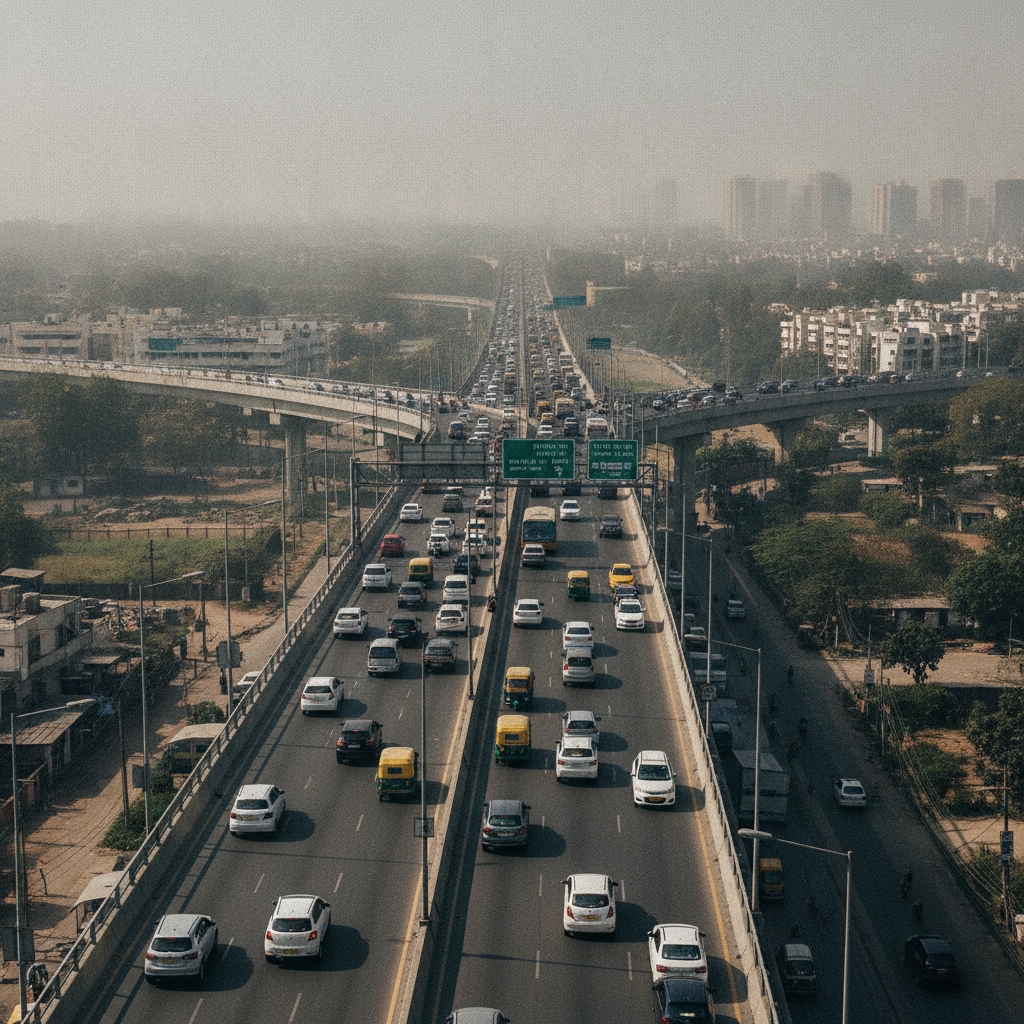
Partial stubble burning remains major hurdle for Delhi air pollution, CEEW study finds
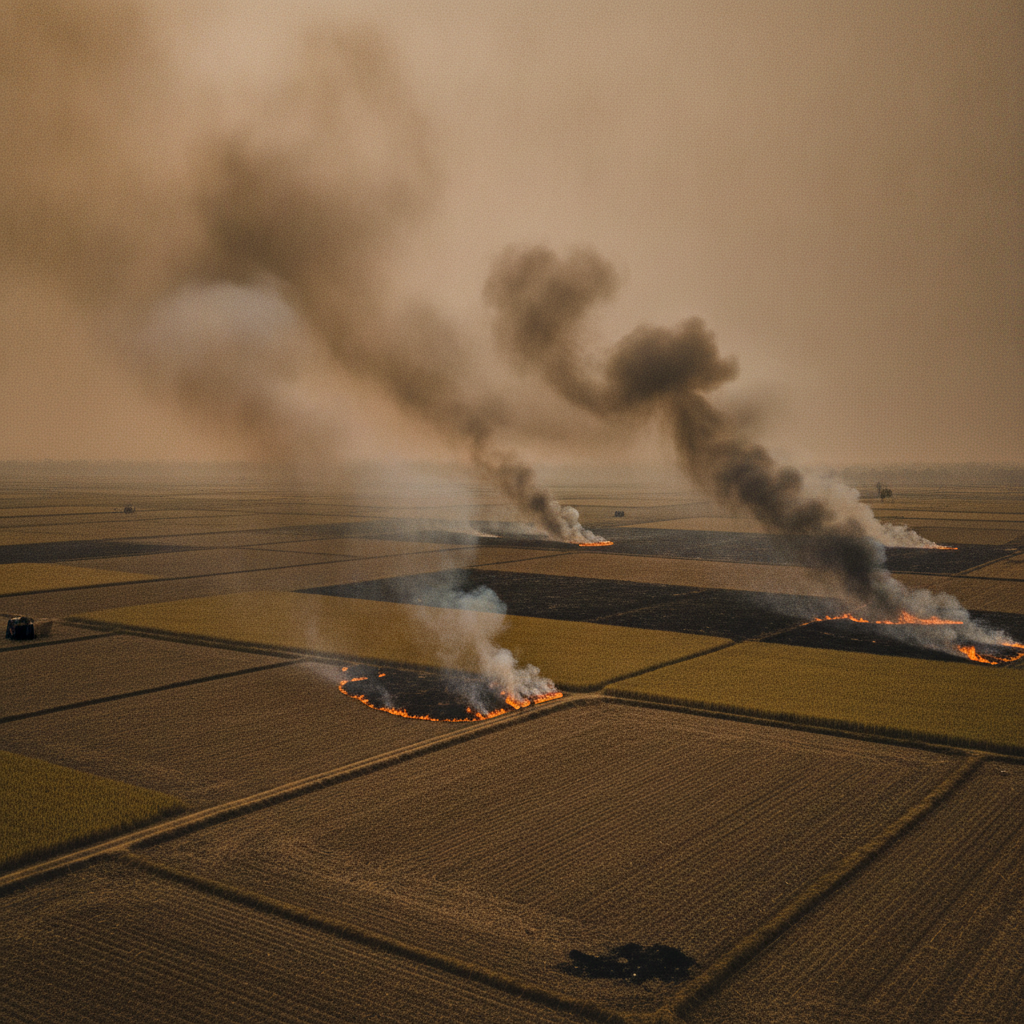
A new study by the Council on Energy, Environment and Water (CEEW) released on Tuesday revealed that the "partial burning" of crop residue by farmers in Northwest India remains a key hurdle in tackling Delhi's severe seasonal air pollution. According to the non-profit organization, stubble burning accounts for up to 30 to 35 percent of Delhi's PM2.5 pollution during the peak season of October and November.
The study, titled 'Behaviour Change Approaches to Tackle Stubble Burning at Scale: Reimagining Crop Residue Management', surveyed 102 farmers across Punjab—specifically in Sangrur, Ludhiana, and Amritsar. It also included focus group discussions with 36 farmers in Amritsar and Kapurthala, alongside consultations with 15 agriculture officials.
The findings showed that while 63 percent of surveyed farmers reported moving away from complete burning, 31 percent—or nearly one in three—continue to partially burn their fields. Another 6 percent of farmers still engage in complete burning, indicating that the adoption of crop residue management alternatives remains uneven.
Farmers who practice partial burning often use crop residue management machines but still set the remaining stubble on fire due to concerns over pest attacks, costs, and a lack of confidence in alternative methods. Among the farmers who continue to burn residue either partially or completely, 67 percent cited the prevention of pest attacks as a primary reason. However, 57 percent of those farmers acknowledged they had never personally witnessed increased pest attacks on their lands, pointing to the influence of peer narratives and hearsay.
Although reported farm-fire incidents have declined since 2022, the CEEW study cautioned that fire counts alone do not fully capture whether farmers have transitioned to sustained no-burn practices. It cited a 2025 study by the Indian Space Research Organisation (ISRO) which noted that stubble burning is increasingly occurring at different times of the day, potentially affecting satellite-based monitoring of farm fires.
To address these challenges, the study recommended aligning communication with the pre-harvest decision window in August and September. During this period, outreach efforts should focus on agronomic benefits, machine access, and planning.