NSA Ajit Doval Meets Wang Yi in Beijing for 25th Round of India-China Border Talks
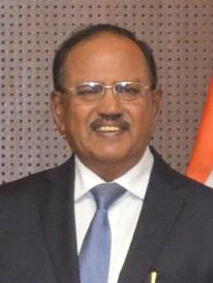
National Security Advisor Ajit Doval met Chinese Foreign Minister Wang Yi in Beijing on Tuesday for the 25th round of Special Representatives' talks on the boundary question, focusing on border delimitation and maintaining peace along the Line of Actual Control (LAC).
The meeting comes ahead of Chinese President Xi Jinping's scheduled visit to New Delhi on September 12 for the BRICS Summit, marking his first visit to India in seven years. During Tuesday's talks, the two sides reviewed existing border-management frameworks and cross-border cooperation mechanisms while seeking to build on a gradual thaw in bilateral relations.
The discussions opened with a restricted session lasting over 90 minutes, followed by a delegation-level meeting that extended into the evening. Earlier in the day, Doval also met with Chinese Vice-President Han Zheng.
Doval stated that bilateral relations were "steadily returning to normalcy" following the severe deterioration triggered by the 2020 military clash in eastern Ladakh. He credited Prime Minister Narendra Modi and President Xi with providing "clear and positive direction" to bilateral ties, noting that primary discussions focused on preserving peace along the border and reinforcing stability.
Wang said both countries should learn from history and prevent the boundary issue from derailing broader relations, warning against "stagnating, backtracking or veering off course." He confirmed progress on commitments made during earlier talks, including border delimitation, institutional exchanges, and cross-border cooperation.
Both sides reaffirmed the 2005 Political Guiding Principles as the framework for negotiations and agreed to continue utilizing the Special Representatives' mechanism to pursue a fair, reasonable, and mutually acceptable settlement.
While neither side identified specific stretches of the LAC for delimitation, the talks advanced an "early harvest" approach agreed upon last year, aimed at resolving manageable border sections through a working group rather than addressing the entire dispute at once.