Noida residential building fire prompts expert safety warnings on EV charging
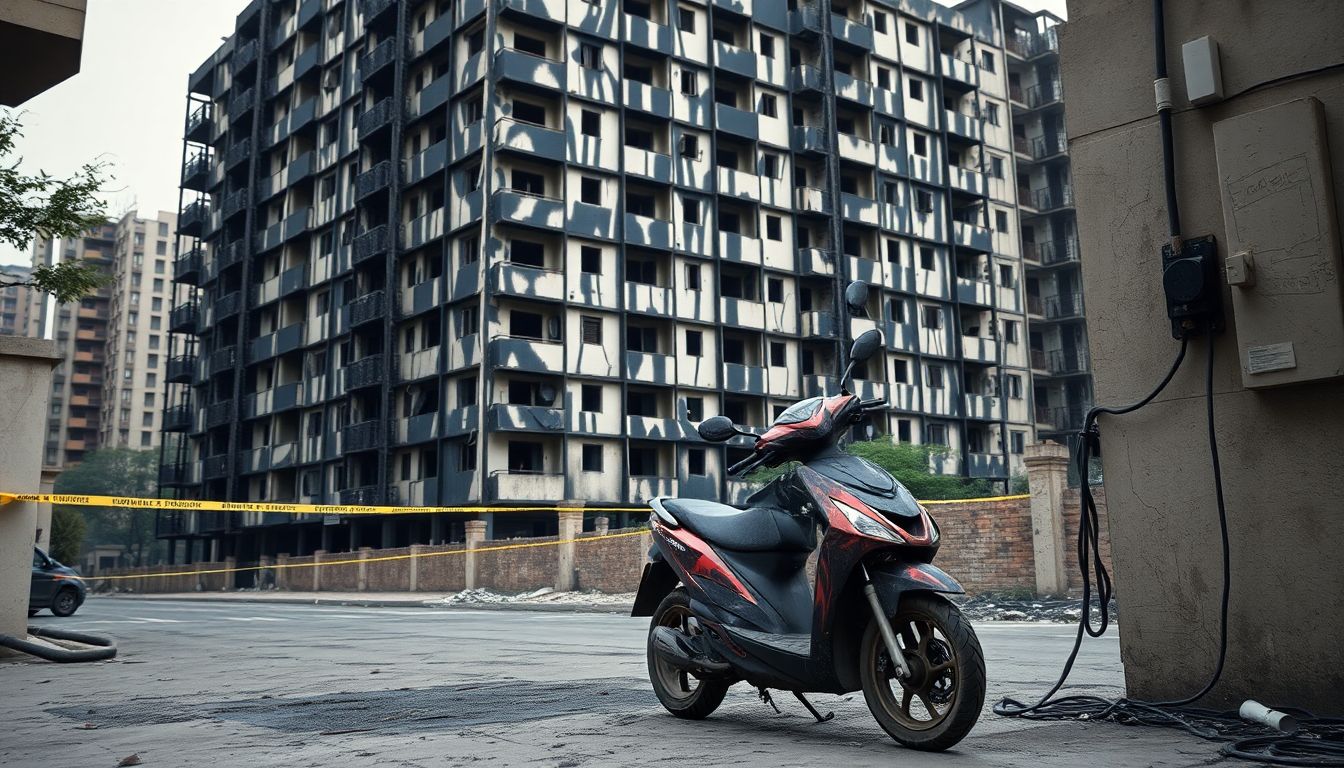
A massive fire in a residential building in Noida has left two people dead and forced the rescue of multiple families, prompting safety experts to issue urgent guidelines on proper electric vehicle (EV) charging practices in housing complexes.
The fire left local residents displaced, including 30-year-old first-floor tenant Aans Chaudhary. Chaudhary, who has lived in the building for six years paying a monthly rent of Rs 9,000, was seen waiting nearby with soot covering his hands and clothes.
Following the incident, electric mobility and policy experts highlighted the critical need for safe EV charging setups to prevent electrical hazards. Genesia Rodrigue, Senior Manager of Public Policy at EV charging startup Kazam, advised that homeowners must ensure chargers are installed by trained technicians rather than using temporary setups.
Rodrigue emphasized that chargers must be connected through a dedicated electrical circuit instead of sharing power with other high-load appliances. She warned that owners should avoid temporary or improvised charging arrangements, which involve extension cords, adapters, or exposed wiring that significantly increase the risk of overheating and electrical faults.
To ensure safety, Rodrigue recommended installing essential protection devices such as miniature circuit breakers (MCBs) and residual current circuit breakers (RCCBs). She also advised ensuring proper earthing and mounting the charger in a dry, well-ventilated location away from water seepage, alongside conducting periodic electrical inspections.
Shyamasis Das, a fellow at the Delhi-based Centre for Social and Economic Progress (CSEP) who works on electric mobility, stated that vehicle owners should exclusively use the charger supplied by the original equipment manufacturer (OEM) for the specific vehicle it was bought for. He warned owners to never ignore warning signs such as burning smells, cable damage, exposed wiring, sparks, or buzzing sounds, advising them to contact the manufacturer immediately rather than relying on untrained local electricians.
The safety concerns come amid a lack of formal infrastructure. A recent study by Kazam and the Alliance for an Energy Efficient Economy (AEEE) revealed that only 55 percent of prospective EV buyers across India have access to formal charging infrastructure.