
Munak Canal Leak Near Bawana Triggers Water Supply Cuts In Rohini Sector 3
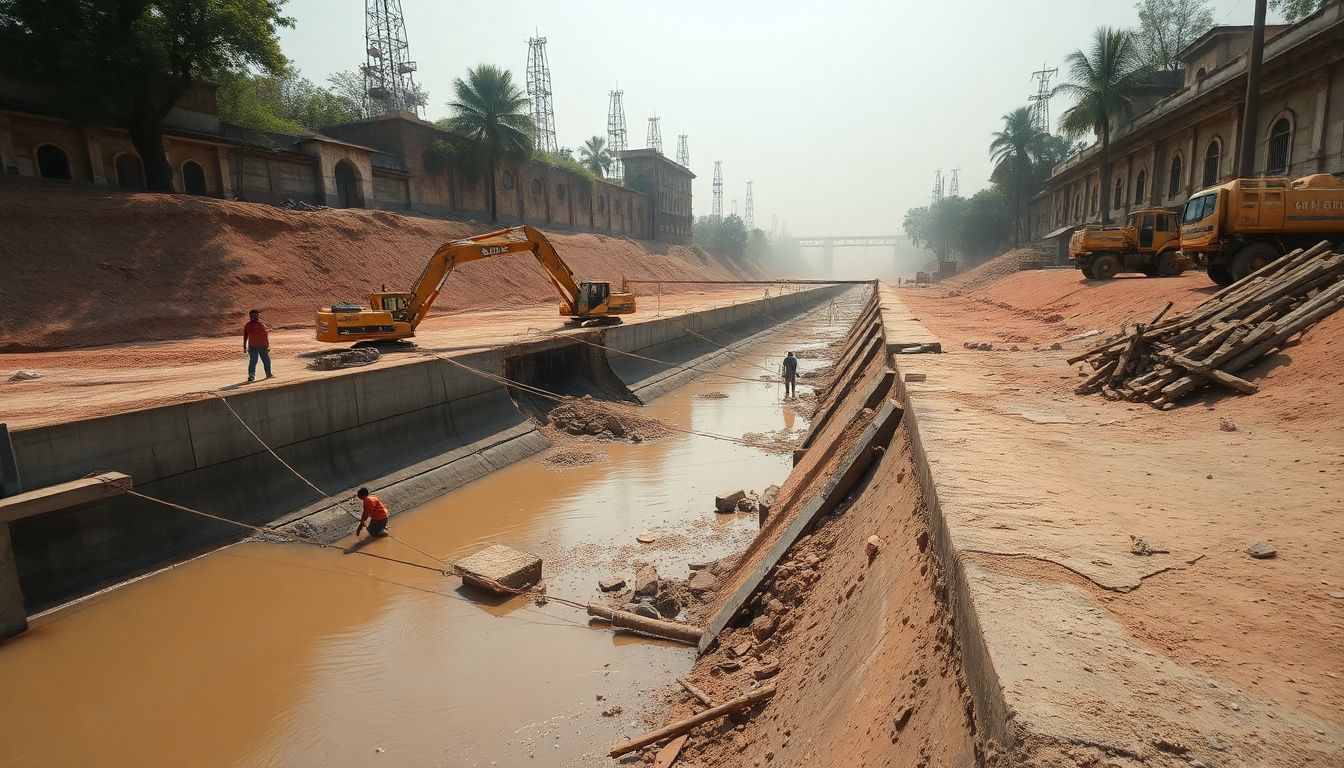
Residents in Rohini Sector 3 and several other localities across Delhi continued to face erratic water supply and instances of contaminated water on Monday, four days after a breach in the Munak canal disrupted raw water supply to the Capital. The leak developed on Friday in the wall of the Carrier Lined Channel near Bawana, causing raw water inflow into Delhi to drop sharply.
According to a government official, the breach reduced inflow through the Carrier Lined Channel (CLC) from its normal volume of 719 cusecs to just 92 cusecs. The sudden drop forced authorities to divert a portion of the raw water supply through the parallel Delhi Sub-Branch (DSB) canal. Although repair work on the breached wall was completed on Friday itself, officials said it takes three to four days to restore reservoir levels and normalize distribution across the network.
The disruption severely affected daily life across multiple neighborhoods. In Rohini Sector 3, residents reported prolonged cuts to their supply. Elsewhere in the city, residents in Palam's Sadh Nagar reported going four days without water, while residents in Inderpuri's EF Block faced three days without supply. Residents expressed frustration over unanswered complaints to the Delhi Jal Board (DJB) and called for water tankers to be sent to affected streets.
The 102-kilometer-long Munak canal carries nearly 37 percent of Delhi's raw water through the CLC and DSB channels to the Haiderpur water treatment plant. Any breakdown in the channel directly impacts treatment capacity and distribution across large parts of the Capital.
This incident represents at least the fourth major disruption to the Munak canal system in recent years. In July 2024, a 40-foot section of the DSB canal collapsed near Bawana, flooding nearby settlements and interrupting water supply. That followed similar breaches in June and October 2023, along with additional failures reported near Barwasni village in Sonipat. Spot checks along the canal have previously revealed damaged concrete lining, cracks, overgrown vegetation, and encroachments. A DJB report submitted to the Delhi Assembly last year showed transmission losses of nearly 30 percent along the DSB canal, compared to 5 percent along the CLC.
Although a 20-kilometer stretch of the canal runs within Delhi, it remains under the maintenance of the Haryana irrigation department under an existing arrangement. A senior DJB official stated that the board will fund the strengthening of the canal lining and that a Detailed Project Report (DPR) is being prepared to prevent future breaches. The Delhi government has proposed taking over maintenance of the local stretch, alongside plans to build protective boundary walls, install solar panels over portions of the canal, and construct an elevated corridor above it.