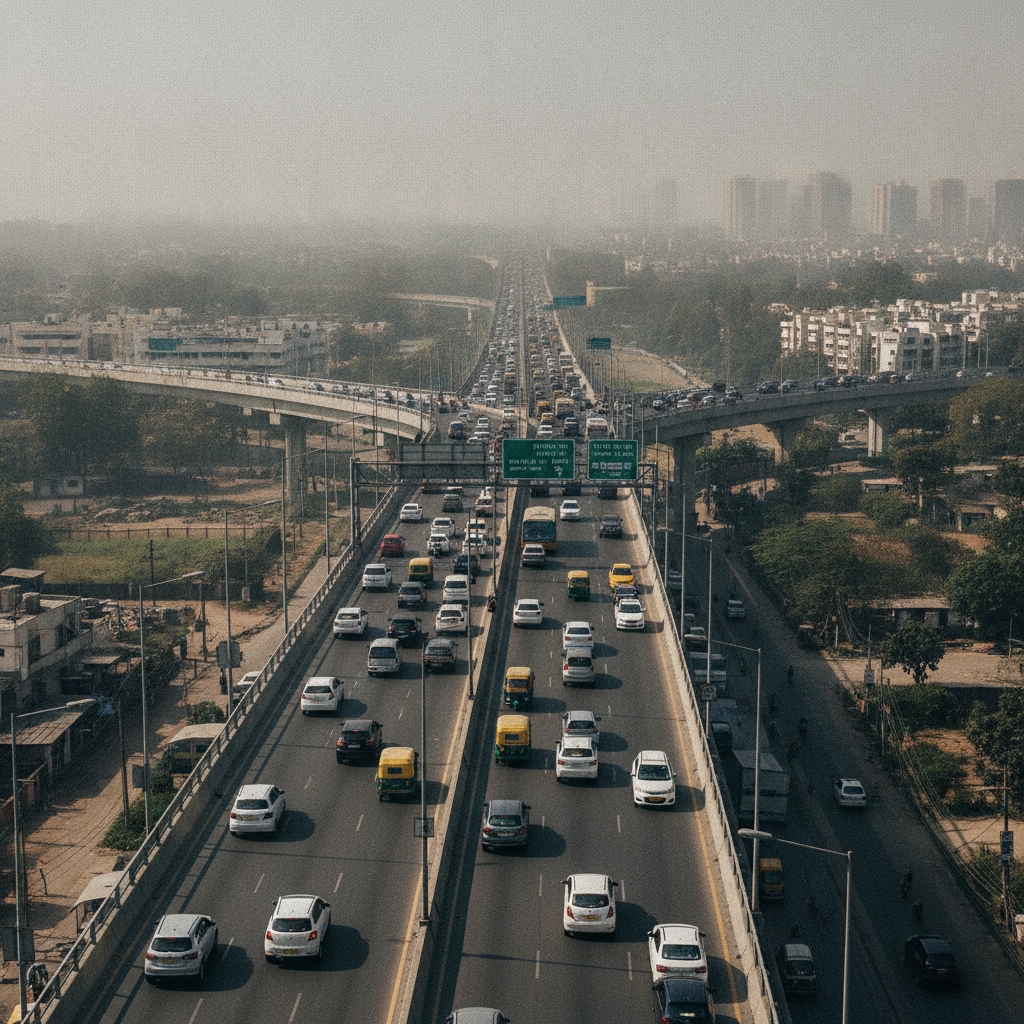
Monsoon Rain Leaves Deep Craters on Sikanderpur Link and Major Arterial Roads
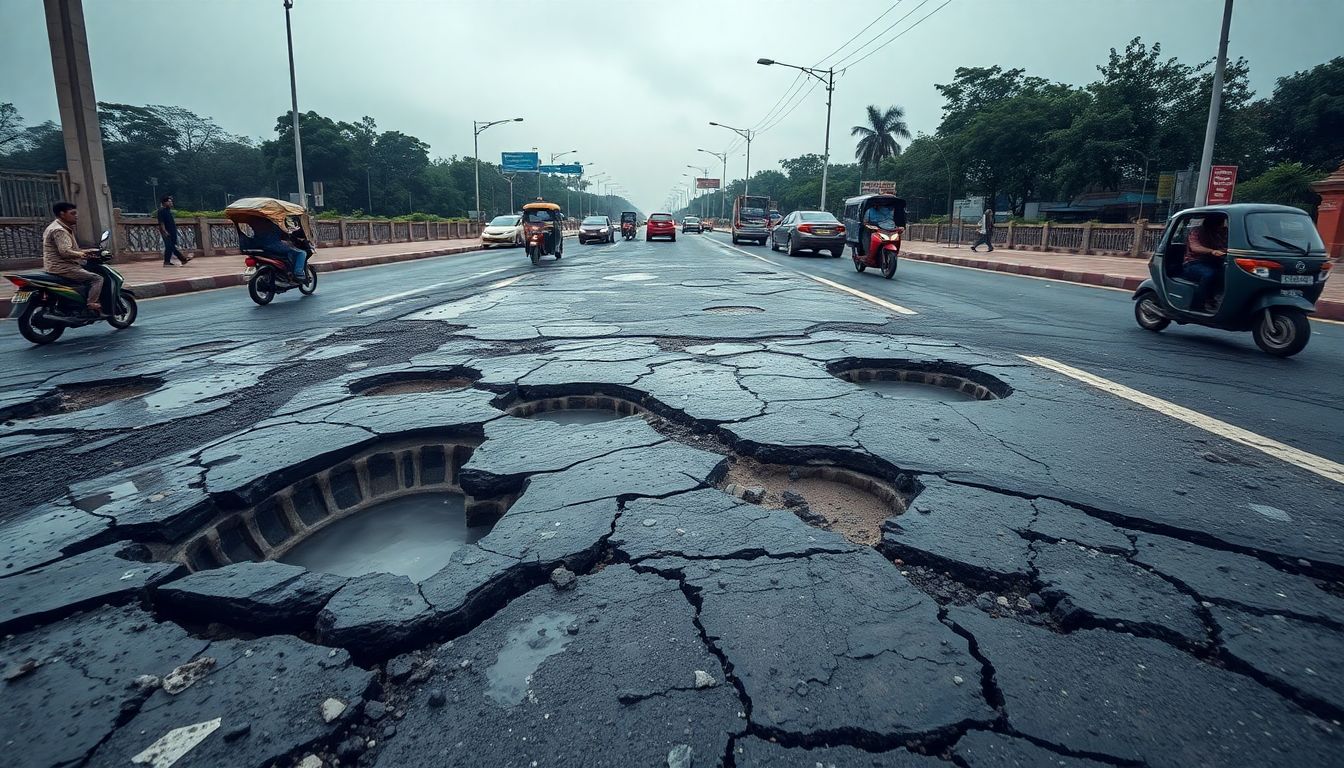
Repeated spells of monsoon rain have damaged key arterial routes across Delhi and NCR, leaving stretches scarred by potholes, broken bitumen, dusty patches, and uneven surfaces. Commuters have taken to social media to highlight severe road damage, including deep craters on the busy link connecting the Sikanderpur metro station to MG Road and Golf Course Road, a route heavily used by traffic heading towards Gurgaon and Faridabad.
Similar deterioration has emerged on other major roads, including Mathura Road, an arterial link connecting central Delhi with Ashram, Sarita Vihar, Jasola, Badarpur, and Faridabad. Portions of the carriageway near Apollo Hospital in Sarita Vihar were found dusty and broken, alongside another damaged patch near a CNG station on the opposite side. A local shopkeeper near the stretch noted that the issue had persisted for nearly three months, with water spilling onto the road even during dry weather due to potholes. The National Highways Authority of India, which maintains Mathura Road, offered no immediate response regarding its condition.
Damage was also reported at several other key transit points. Cracked and broken surfaces were found on the Geeta Colony bridge towards Rajghat, while stretches near Modi Mill showed dusty surfaces and loose soil. Potholes and uneven surfaces were observed on Vivekanand Marg near New Delhi Railway Station, Ashram Marg, and Sachivalaya Marg. In Malviya Nagar, social media complaints pointed to a broken water pipe and extensive craters on the road.
Experts pointed to drainage failures as the primary driver behind the recurring damage. S. Velmurugan, senior adviser at the National Council of Applied Economic Research, explained that bituminous roads—the only pavement type laid in the National Capital Territory of Delhi—suffer heavily from water accumulation caused by inadequate stormwater drains designed in 1978. Without an upgraded drainage system or a major government revamp, Velmurugan noted, road quality will continue to deteriorate across major stretches, from flyovers to the Inner and Outer Ring Roads.
Another road engineer noted that while concrete roads better resist water-induced deterioration, bituminous roads are widely used for their riding quality and ease of repair. However, water entering the pavement weakens the bond between the aggregates, fine material, and bitumen. Meanwhile, Public Works Department officials stated that several roads have been repaired and work is underway on others across the roughly 1,400 kilometres of roads under their jurisdiction, with tenders invited for further repairs.