Mandates, Subsidies Alone Cannot Drive Shift to E-Motorcycles, Say Experts at ICTS 2026
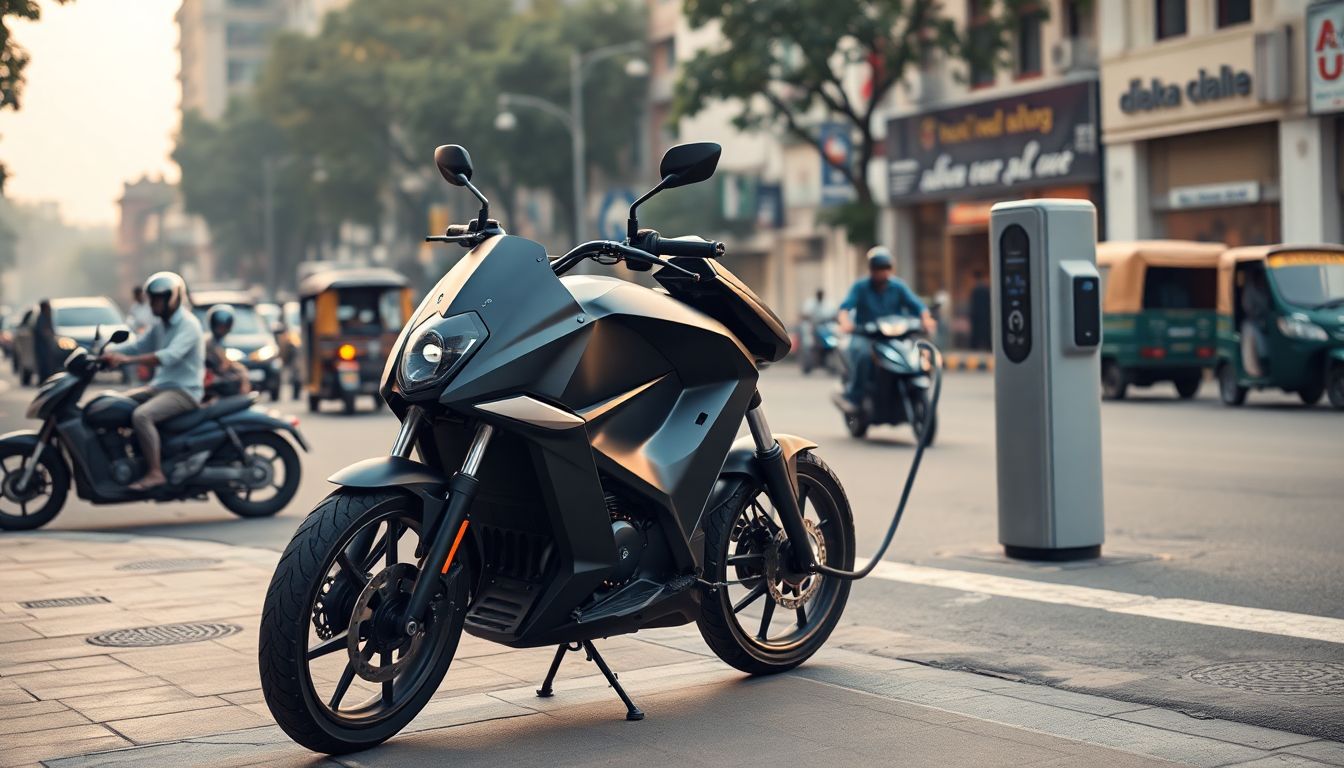
Policy mandates and financial incentives alone will not be sufficient to accelerate the transition to electric motorcycles, industry leaders and mobility experts stated on Wednesday at the India Clean Transportation Summit (ICTS) 2026 in New Delhi. The discussions occurred against the backdrop of the Delhi government's plan to register only electric two-wheelers starting in April 2028.
Speaking at a session organised by the International Council on Clean Transportation (ICCT), Ajay Mathur, former director general of the International Solar Alliance and the Bureau of Energy Efficiency, identified three central obstacles to adoption: safety and thermal management, battery-swapping interoperability, and the lack of a demand-creation ecosystem. Mathur stated that mandates must be supported by improved charging infrastructure and financing options, noting that users need overnight charging facilities so vehicles are ready each morning.
Financing terms also pose a significant barrier, according to Paroma Bhat, head of public policy and government relations at Uber India and South Asia. Bhat pointed out that while internal-combustion engine (ICE) two-wheelers offer longer equated monthly instalment (EMI) tenures, electric two-wheeler financing is typically limited to three years, raising monthly costs for buyers. She added that gig workers need charging solutions comparable to conventional fuel stations to avoid costly downtime.
Subrata Mitra, head of government relations at Ather Energy, noted that electric motorcycle usage differs from scooters, with many users covering 60 to 100 kilometres per day without home charging options. Mitra called for a "right to charge" framework to streamline permissions and resolve infrastructure challenges, expressing confidence that manufacturers can address vehicle engineering needs.
Vehicle availability and pricing caps were also highlighted during the summit. Ridhi Palia, a research associate at ITS UC Davis, noted that electric motorcycles offer fewer choices than scooters, adding that higher upfront costs and subsidy limits hinder wider adoption. Vinayak Bhat, chief product officer at Ultraviolette Automotive, explained that two-wheeler subsidy structures previously steered manufacturers toward low-power designs, though premium makers are now building electric models that outperform conventional ICE vehicles.
The discussions follow the notification of the Delhi EV Policy 2026 on July 1, 2026, which outlines the phase-out of ICE two-wheelers. The policy provides a purchase incentive of ₹5,000 per kWh of battery capacity capped at ₹30,000, along with a scrapping incentive of up to ₹5,000. Two-wheelers currently account for over 60% of all new vehicle registrations in the national capital.