Jahangirpuri AQI Hits Severe 452 as Industrial Emissions and Low Winds Trap Delhi Smog
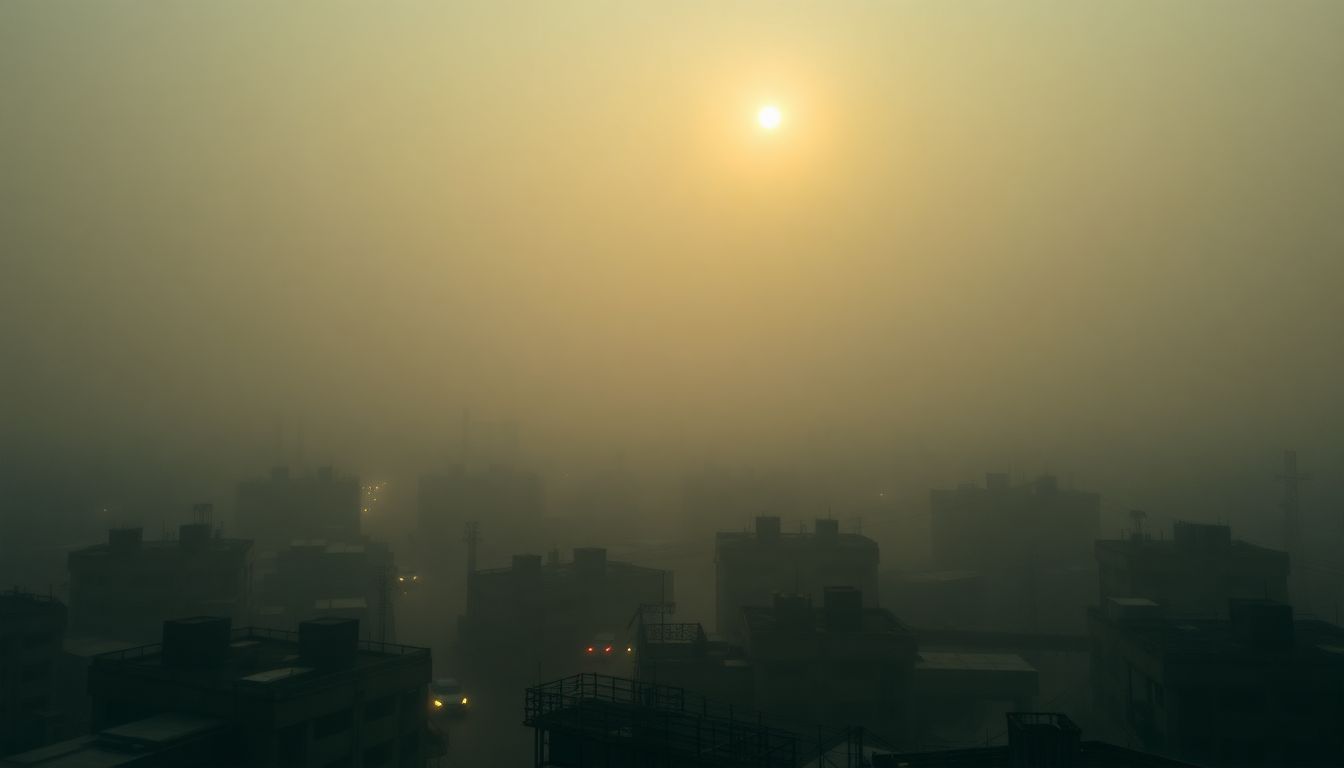
Jahangirpuri in New Delhi recorded the highest pollution readings among all monitoring stations across the capital on Wednesday afternoon, with the local Air Quality Index reaching a severe 452 at 2:05 pm. Environmental analysts attributed the persistent spike to heavy industrial activity, falling wind speeds, and obstacles preventing the dispersion of pollutants.
The monitoring station in Jahangirpuri has registered consistently elevated readings over the past week. According to official data, the neighbourhood's 24-hour average AQI stood at 462 on Tuesday, 436 on Monday, 378 on Sunday, and 243 on October 31, establishing it as the city's primary pollution hotspot.
By comparison, Delhi's overall AQI stood at 378 at 3:05 pm on Wednesday, placing the city in the 'very poor' category. The citywide 24-hour average was 350 on Wednesday, climbing from 324 on Monday and 261 on Sunday. Under Central Pollution Control Board standards, an AQI of 0-50 is considered 'good', 51-100 'satisfactory', 101-200 'moderate', 201-300 'poor', 301-400 'very poor', and 401-500 'severe'.
Sunil Dahiya, founder and lead analyst at Envirocatalysts, noted that a combination of local emissions, poor ventilation, and unfavourable meteorological conditions drove the crisis. He stated that three major factors were interacting to trigger the sharp rise, including heavy combustion from nearby factories that releases high quantities of fine particulate matter.
"There is high industrial activity in the area around Jahangirpuri. Industrial activity means combustion, which leads to high emissions of PM2.5," Dahiya said. He added that wind speeds dropped over recent days, accumulating pollutants in the absence of ventilation, while a tall building positioned on one side of the Jahangirpuri station may also be obstructing pollutant dispersal.
Delhi remains under Stage II of the Graded Response Action Plan, which took effect after the capital's air quality entered the very poor bracket. The 12-point plan requires intensified mechanical and vacuum-based road sweeping, widespread water sprinkling, stricter dust control protocols across construction projects, and increased field inspections to halt construction and demolition violations.