J.P. Nadda to launch revised Anaemia Mukt Bharat guidelines at Vigyan Bhawan
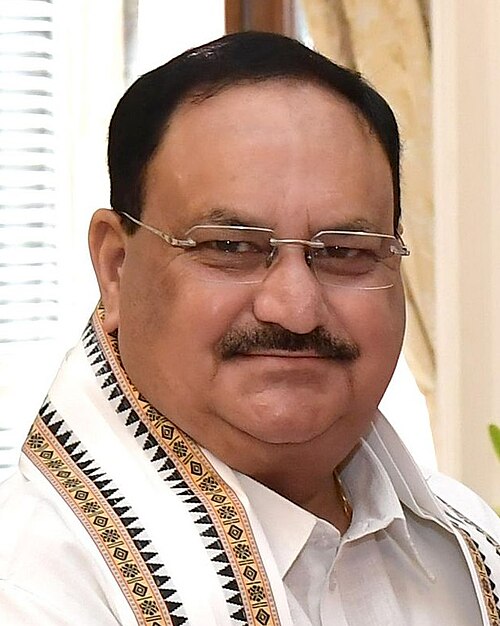
The Union Health Ministry is scheduled to launch revised operational guidelines for the Anaemia Mukt Bharat (AMB) Abhiyaan at Vigyan Bhawan in Delhi on Monday, June 29, 2026. Union Health Minister J.P. Nadda will release the guidelines during the 16th meeting of the Central Council of Health and Family Welfare.
The updated framework marks the transition of the national programme to the Anaemia Mukt Bharat Abhiyaan. It seeks to strengthen anaemia control across the country through improved testing, treatment, digital monitoring, and community participation.
Under the new guidelines, the existing 6x6x6 strategy will expand into a 7x7x7 framework. This expansion introduces low birth weight babies aged zero to six months as a seventh beneficiary group to ensure early intervention.
Additionally, a new "eating right" component has been added as the seventh intervention to promote iron-rich and diversified diets. The program will also implement digital tracking of beneficiaries as its seventh institutional mechanism to improve monitoring and evaluation.
The revised guidelines transition the program from the previous T3 approach of Test, Treat, and Talk to a new T4 strategy of Test, Treat, Talk, and Track. This updated approach emphasizes routine haemoglobin testing, standardized treatment protocols, systematic tracking for follow-ups, and dietary counseling.
For pregnant and lactating women diagnosed with severe anaemia who do not respond to oral iron therapy, the guidelines recommend intravenous iron therapy using Ferric Carboxymaltose and Iron Sucrose.
To support monitoring, the Ministry has proposed an integrated digital ecosystem. Haemoglobin testing records for pregnant women will be captured through the JANANI Portal, while data on children will be recorded on the RBSK and U-WIN portals. These platforms will eventually converge into a unified AMB Abhiyaan Portal.
According to a Ministry release on Sunday, June 28, 2026, the guidelines aim to combine iron supplementation with improved diagnosis, therapeutic management, nutrition, and digital monitoring.
National Family Health Survey (NFHS-5) data highlights the ongoing challenge, showing that 67.1% of children aged six to 59 months, 57% of women aged 15 to 49, 52.2% of pregnant women, and 59.1% of adolescent girls aged 15 to 19 in India are anaemic.