Delhi Police install anti-bird spikes on Lutyens' Delhi CCTV cameras to stop pigeons
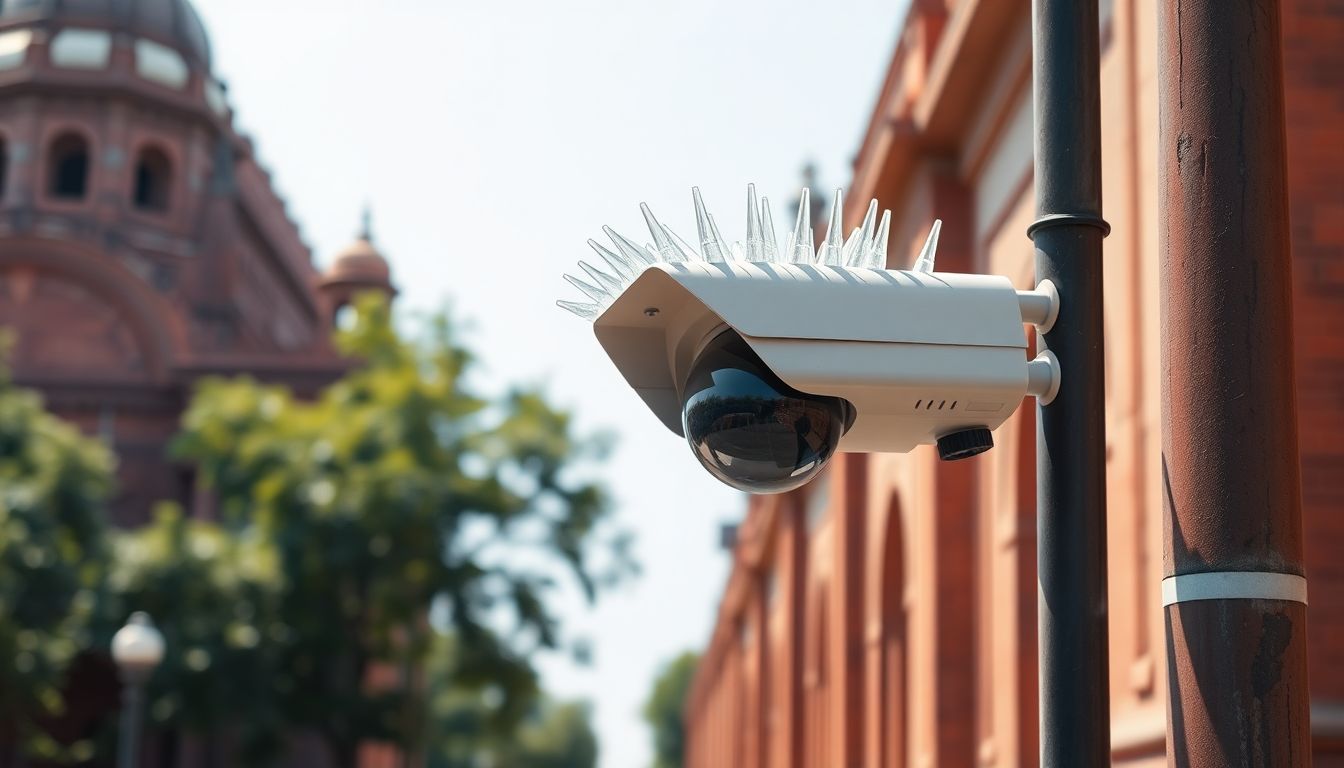
The Delhi Police recently began installing plastic anti-bird spikes around CCTV cameras across the high-security Lutyens' Delhi zone to prevent pigeons from perching above them and obscuring lenses with droppings. This measure aims to ensure uninterrupted security surveillance and reduce recurring maintenance costs in the sensitive area, which houses Parliament, Rashtrapati Bhavan, North and South Block, diplomatic missions, and key government offices.
Pigeons are a familiar sight across Lutyens’ Delhi, frequently perching on sandstone buildings, traffic lights, lamp posts, and footpaths. However, the birds have lately become an unexpected challenge for law enforcement. Officers noted that the pigeons have been interfering with one of the capital's most critical surveillance systems by leaving droppings directly above the cameras, which repeatedly blurred the lenses and obstructed vital footage.
To address this issue, slim plastic spikes—typically seen on balconies, ledges, and rooftops to deter birds—are now being fitted onto poles carrying CCTV cameras throughout central Delhi. A police officer confirmed that the spikes were installed recently because the droppings had become a recurring maintenance problem that regularly blocked the camera views. Going forward, all new Delhi Police CCTV cameras in the area are being fitted with the deterrent.
While the issue of bird droppings might appear minor, officials emphasized that it has significant operational implications. The surveillance cameras in the Lutyens' zone are heavily relied upon throughout the day to monitor VIP movement, manage traffic flow, and secure sensitive locations. Investigators require clear feeds to identify suspects, reconstruct the sequence of road crashes, and track vehicles.
Furthermore, the clear footage from these cameras is essential because they form part of the network used by the Delhi Police for facial recognition system (FRS) analysis during investigations. While the large-scale deployment of this technology has drawn criticism from digital rights and privacy advocates globally over concerns of mass surveillance and profiling, the police maintain that clear images are vital for their operational efforts.
According to officials, the problem of obscured lenses often worsens during the monsoon season. Rainwater tends to spread the droppings across the transparent covers that protect the lenses, further reducing image quality. The high-security surveillance network is currently maintained by the Electronics Corporation of India Limited (ECIL) and Telecommunications Consultants India Limited (TCIL).