Delhi Police Bust Nepal Charas Syndicate, Seize ₹109-Crore Drugs
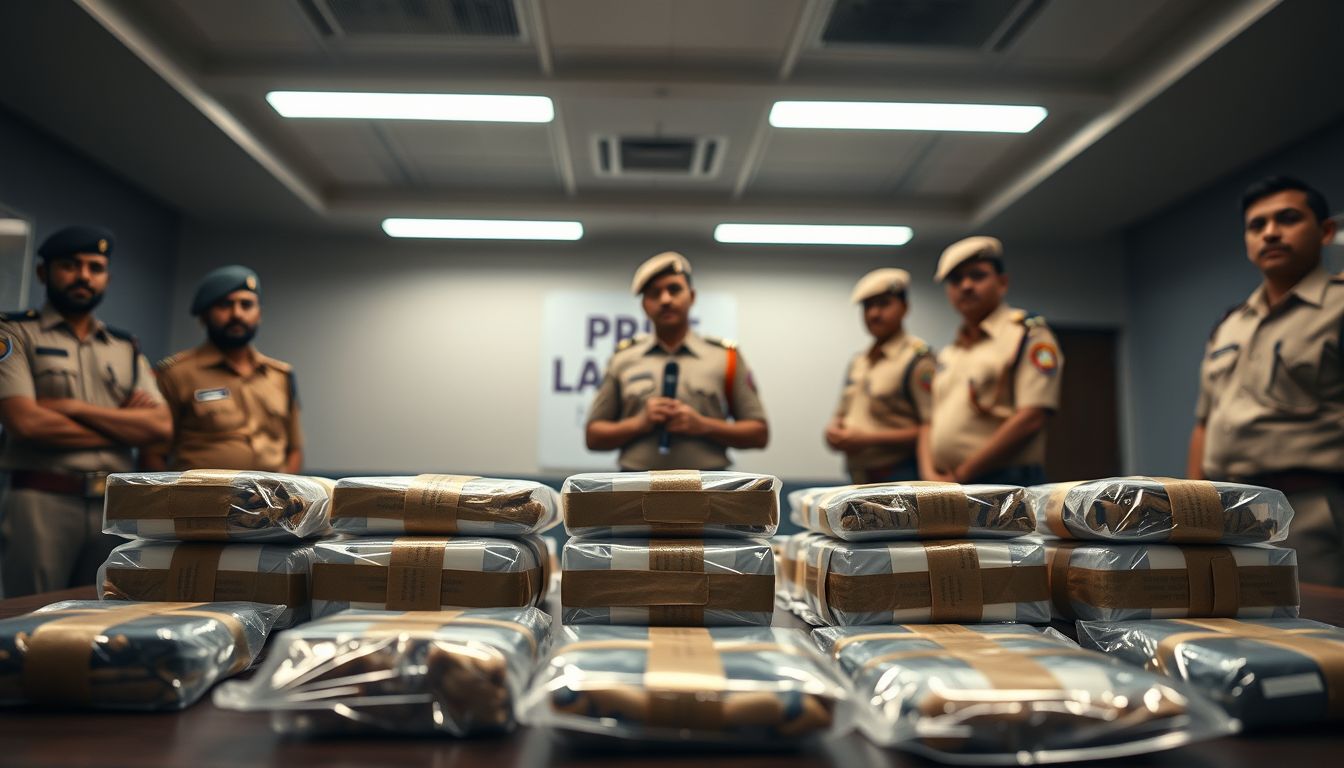
Delhi Police’s South District has dismantled an international drug trafficking network following raids in Kotla Mubarakpur and Wazirabad, arresting four Nepalese nationals and recovering 106.250 kilograms of high-quality charas estimated to be worth around ₹109 crore.
The 1.5-month-long operation began on June 29 when police seized 8.598 kilograms of charas from a residence in Kotla Mubarakpur. The initial raid led to the arrest of three individuals: Bharat Thapa, 32, Govind Budha, 32, and Jyoti Pun Magar, 50.
Following interrogation, technical surveillance, financial analysis, and local intelligence, investigators traced the supply chain to a major storage and distribution facility in Wazirabad run by 32-year-old Roshni Magar. Police raided the Wazirabad premises on August 12, seizing 97.652 kilograms of charas packed inside 13 plastic bags, alongside a mixing machine and packing materials.
According to Deputy Commissioner of Police (South District) Anant Mittal, the syndicate had been operating across Delhi for the past four to five years. Investigators stated that Roshni Magar had fled to Nepal after her associates were arrested in June, but she recently returned to Delhi and resumed operations under the assumption that police scrutiny had died down.
The police investigation revealed that the syndicate sourced the contraband from suppliers in Nepal, including the Kakri area of Rukum, and transported it into India through the Sonauli border. Consignments were moved by road to evade checkpoints before reaching Delhi, where the contraband was stored, divided into smaller packages, and distributed based on demand.
The syndicate coordinated drug orders over social media platforms, including Telegram, and received payments through cash and digital banking channels. Members routinely deleted communications after completing transactions.
For local deliveries, the syndicate used autorickshaws and bike taxis to supply distributors and customers. Police noted that the network targeted youth-centric areas and demand centres like Wazirabad and Majnu Ka Tila, including supplies linked to nearby pubs, bars, and hotels.
Investigators are currently probing the broader cross-border network. Two other Nepalese nationals, identified as Binmaya—suspected of arranging transport from the Sonauli border—and Hari, an alleged supplier, have been identified. Police are analysing financial trails to identify additional individuals who financed, transported, or distributed the drugs.