
Delhi Crackdown on Illegal Fifth Floors Blocked by Longstanding Amnesties
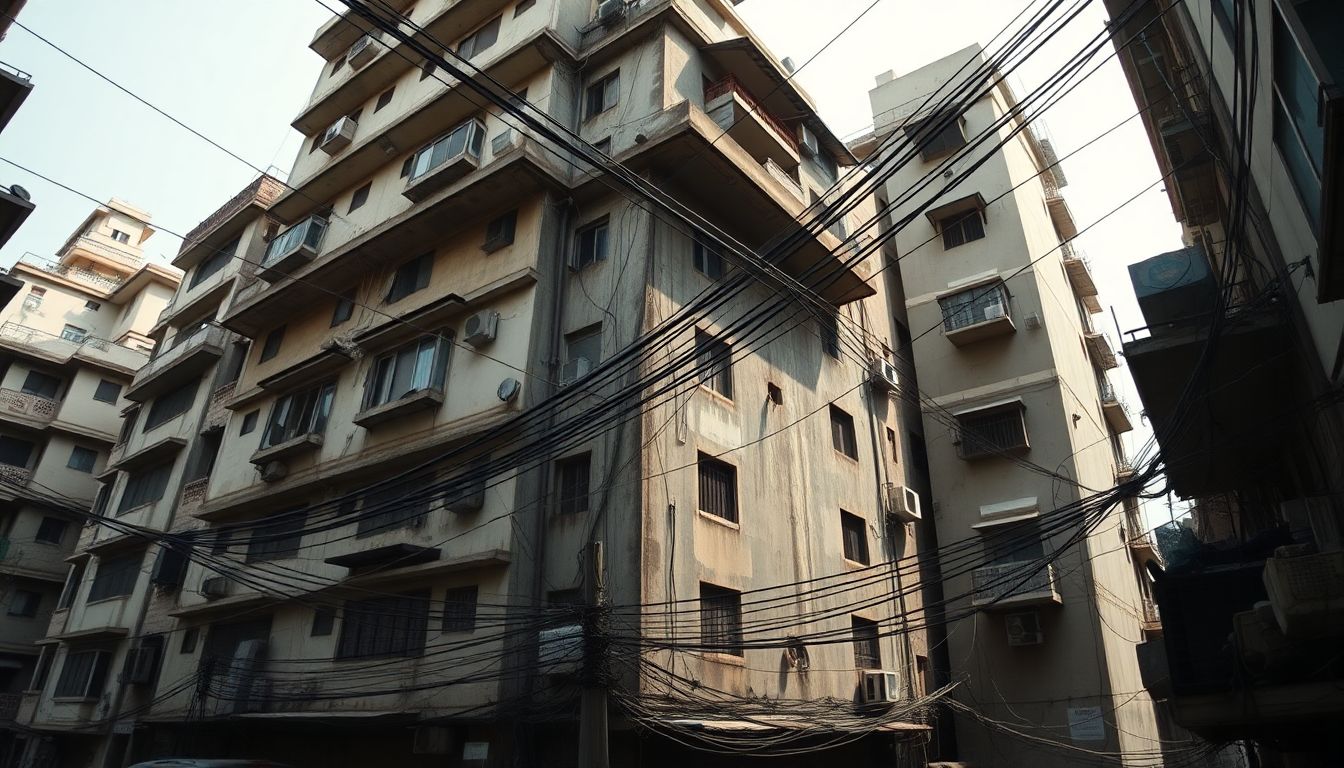
A planned crackdown on illegal fifth floors in Delhi, announced by Chief Minister Rekha Gupta following a fatal building collapse in Satya Niketan, faces severe roadblocks due to decades of legislative protections and government regularisation policies.
Under current municipal building regulations, most residential plots in the capital permit a ground floor plus three storeys up to a maximum height of 15 metres, with stilt parking extending permissible height to 17.5 metres. However, these limits are widely breached across Old Delhi, urban villages, abadi lands, resettlement colonies, and unplanned trans-Yamuna zones. In unauthorised colonies, structures frequently reach seven to eight storeys, but civic officials say existing legal provisions shield hundreds of thousands of such properties from punitive action.
The regulatory protection originated in February 2006, when the Municipal Corporation of Delhi launched a court-ordered sealing drive. To halt enforcement, Parliament enacted the Delhi Laws (Special Provisions) Act, 2006, providing temporary relief against sealing. That protection was repeatedly extended in 2007, 2009, 2011, and every three years thereafter. Most recently, the National Capital Territory of Delhi Laws (Special Provisions) Second (Amendment) Act, 2023 extended immunity for unauthorised constructions through December 31, 2026.
Enforcement was further constrained on April 7, when the central government announced the regularisation of 1,511 unauthorised colonies on an "as-is, where-is" basis, impacting approximately 4.5 million residents. Municipal officials confirmed that this policy prevents the demolition or sealing of older existing upper floors in these settlements, even though many multi-storey buildings were constructed without adhering to safety or building codes.
Urban planning expert and former MCD works committee chairman Jagdish Mamgain noted that successive administrations since 1977 have used regularisation policies and amnesty laws rather than resolving the core deficit of planned housing. Mamgain said what was intended as a temporary hold has turned into a permanent loophole for continuous illegal expansion. He added that special areas such as Paharganj and the Walled City still operate under building norm relaxations because a designated local plan under MPD-2021 was never formulated.
Punitive deterrence has also been scaled back. Former municipal councillor Abhishek Dutt pointed out that Section 466A, introduced in 1985 to impose up to six months' imprisonment and a ₹5,000 fine for illegal construction, was recently eliminated under the Jan Vishwas Bill as part of an Ease of Doing Business initiative.