Delhi Auto Unions Oppose EV Policy Citing Rs 80000 Cost Gap
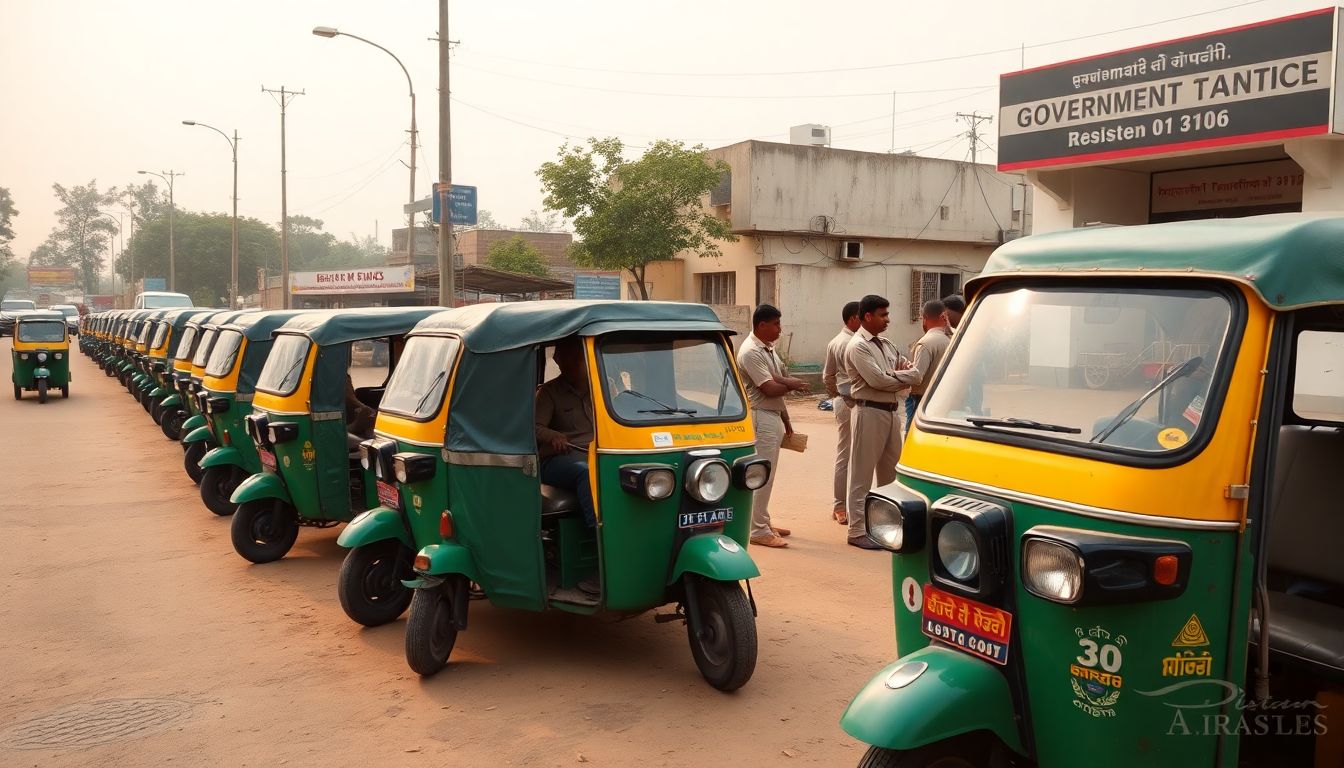
On June 30, 2026, auto-rickshaw unions in Delhi raised serious concerns over the city's new electric vehicle (EV) policy, warning that the transition will cause a severe financial burden on drivers. The associations highlighted a cost difference of up to Rs 80,000 between traditional CNG vehicles and electric models, alongside a critical lack of charging infrastructure across the capital.
According to transport unions, a standard CNG auto-rickshaw currently costs approximately Rs 2.70 lakh. In contrast, electric autos are priced between Rs 3.24 lakh and Rs 3.50 lakh, depending on the brand. Union leaders argue that this price gap will directly impact drivers who already operate on very thin profit margins.
Rajinder Soni, the general secretary of the Delhi Auto Rickshaw Sangh, stated that the government must establish adequate charging infrastructure before enforcing the transition. Soni recalled the chaotic transition to CNG autos in 1998, when drivers faced intense struggles to obtain fuel at stations, and expressed concern that similar long queues and disputes could occur at charging stations.
The Delhi Auto Rickshaw Sangh has written to the government, urging it to petition the Supreme Court to release 50,000 additional auto permits. The Supreme Court currently caps the total number of auto-rickshaw permits in Delhi at 1 lakh. Soni warned that failing to address these issues would place an unfair burden on drivers and push them further into financial distress.
Worker organizations representing gig and platform workers also voiced opposition to the policy's economic impact. Nirmal Gorana, the national coordinator of the Gig and Platform Service Workers Union (GIPSWU), criticized the government for making unpredictable decisions without adequately considering the livelihoods of poor workers dependent on petrol or CNG vehicles.