Delhi Assembly Passes 4 Bills On Shelter Rehabilitation, Fire Safety And Services
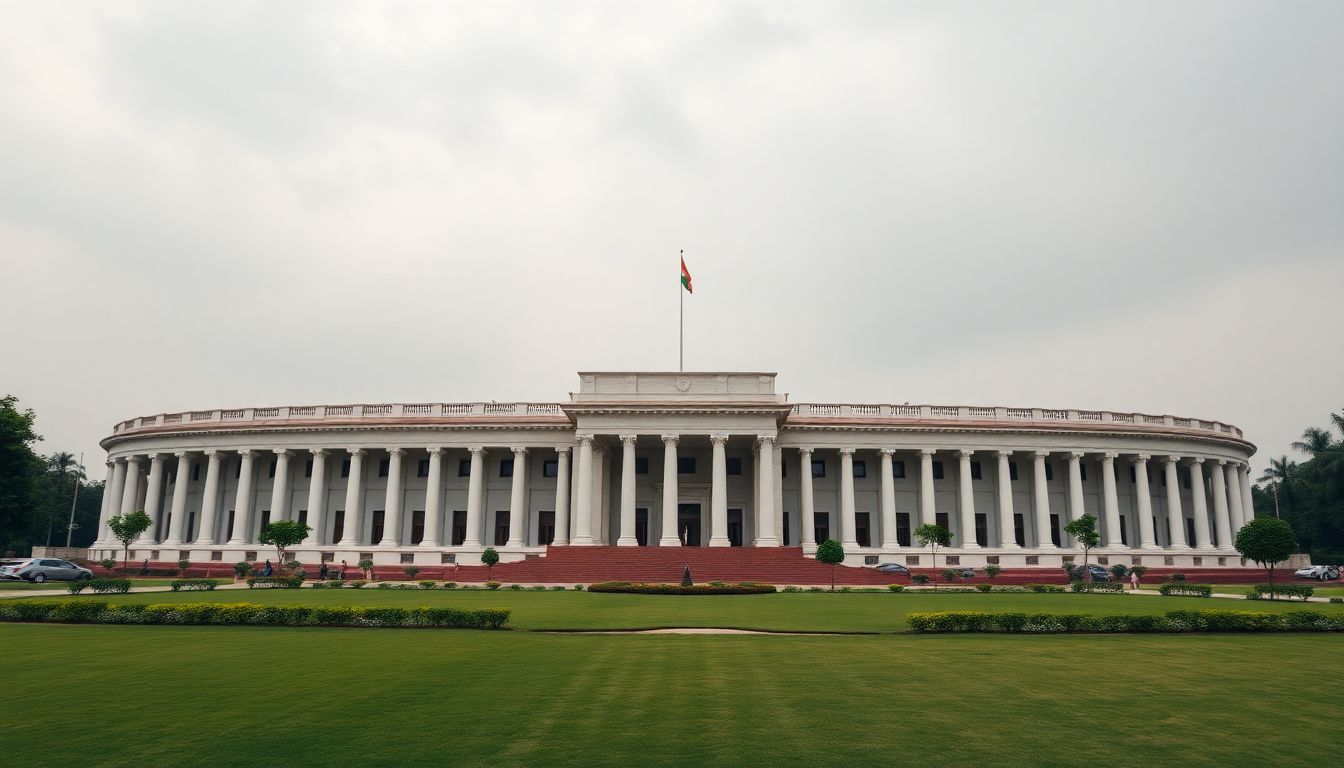
The Delhi Assembly on Tuesday passed four legislation bills aimed at overhauling the capital's shelter rehabilitation framework, guaranteeing time-bound delivery of government services, updating fire-safety regulations, and repealing the bed-and-breakfast law. The legislative actions were enacted during the final day of the Monsoon Session, amid disruptions and debate over Comptroller and Auditor General of India (CAG) audit reports.
Among the measures cleared was The Delhi Urban Shelter Improvement Board (Amendment) Bill, which shifts the cut-off date for identifying jhuggi jhopri (JJ) clusters from January 1, 2006, to January 1, 2025. The amendment aligns with the Delhi Slum and Jhuggi Jhopri Rehabilitation and Relocation Policy, 2026. According to the government, the change provides legal clarity to identify eligible clusters and facilitate rehabilitation and relocation, though it carries financial implications for DUSIB and the Delhi government.
The Assembly also passed The Delhi (Right of Citizen to Time Bound and Ease of Delivery of Services) Bill, establishing the delivery of notified public services as a statutory right. Under the law, citizens can submit applications and track progress online using a unique application number. Unjustified delays will attract penalties of ₹250 per day, capped at ₹5,000. Information Technology Minister Dr Pankaj Kumar Singh stated that delays will trigger auto-escalation and fix accountability, reducing the need for residents to make repeated physical visits to government departments.
Additionally, the Delhi Fire Services (Amendment) Bill was passed to ensure consistency between the Delhi Fire Service Act, 2007, and Delhi Fire Service Rules. Home Minister Ashish Sood noted the amendment is part of a broader deregulation exercise. The House also approved the Bed and Breakfast Establishments (Repeal) Bill, repealing the original 2007 law along with amendments made in 2010 and 2021 to accommodate changes in the hospitality sector through a policy-based framework.
Assembly proceedings faced disruptions when opposition members entered the well of the House and threw rice over alleged procurement irregularities. Several leaders, including Aam Aadmi Party (AAP) MLAs Sanjeev Jha and Kuldeep Kumar, were marshalled out of the chamber. Food Supplies Minister Manjinder Sirsa responded that the government had not carried out procurement directly but had approved a request submitted by an agency.
The latter half of the session focused on two CAG audit reports presented to the House. Speaker Vijender Gupta stated one report detailed audit findings for various departments in 2022-23, covering revenue losses in stamp duty and registration fees, expenditure by DSSSB, power subsidy policies, GTB Hospital payments, DSIIDC, e-procurement, Public Works Department projects, LNJP Hospital construction, DTC, and the Delhi Jal Board. The second report covered state finances. Both reports were submitted to relevant departments for Action Taken Notes and sent to the Public Accounts Committee (PAC) for examination.
Chief Minister Rekha Gupta addressed the House, noting that 19 CAG reports have been tabled since the current administration took office. She pointed out that 1,734 utilization certificates involving approximately ₹19,973 crore were pending, while 482 had been submitted. Another batch of pending certificates concerned ₹2,650 crore, against which 323 were submitted. Gupta also alleged that 45 tenders worth ₹530 crore during the previous administration were linked to a single PAN card, and highlighted under-utilization of the ₹80,798-crore budget for 2024-25, where actual expenditure reached roughly ₹61,000 crore.