DDA to plant 1 lakh native trees across Delhi Ridge by end of September
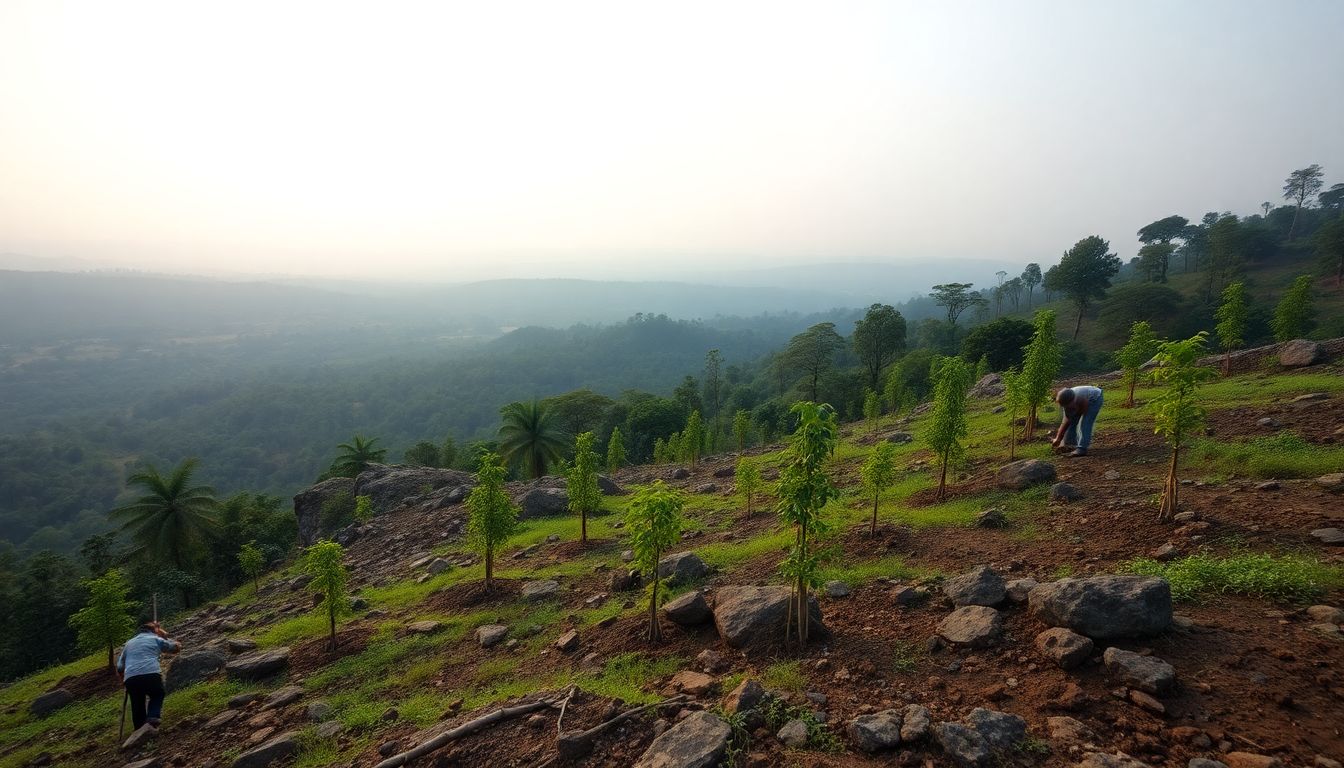
The Delhi Development Authority (DDA) has intensified its ecological restoration efforts on the Ridge this monsoon season, launching a major drive to plant 1 lakh indigenous trees and 81,700 native shrubs. The massive planting drive spans 120 hectares of forest land across four key areas of the capital: the Nanakpura Ridge, Kamla Nehru Ridge, South Central Ridge, and Central Ridge.
The project, which is scheduled for completion by the end of September, is being executed based on specific directions issued by Delhi Lieutenant Governor TS Sandhu. The primary objective of the initiative is to replace invasive vegetation with native plant species to fully revive the Ridge’s original ecosystem.
According to a DDA official, the authority is implementing a grid-based, multi-tier planting model for this project. This specialized model is designed to recreate the complex structure and ecological functions of Delhi’s native forests, moving away from past practices that merely focused on increasing the overall tree cover.
To ensure the long-term survival of the new saplings and protect the restored areas, the DDA is putting security measures in place. Most of the restored sites are protected by permanent boundary walls. In other areas where walls are not feasible, bio-fencing is being set up, and security guards are being deployed to monitor the locations.
The ecological restoration work is divided across different sections of the Ridge forest. The largest share of the work is taking place on the South Central Ridge, which includes Sanjay Van. In this area, the restoration efforts cover more than 90 hectares of the total 626-hectare forest.
The remaining restoration work is spread across the other three locations. This includes 18 hectares of land on the Central Ridge, 10 hectares on the Northern Ridge (also known as the Kamla Nehru Ridge), and 1.5 hectares on the Nanakpura Ridge.
On the Nanakpura Ridge, the DDA has already begun removing invasive plant species. Following the removal process, workers are planting approximately 1,200 indigenous trees and 1,600 native shrubs to restore the local environment.