DDA Revises Policy to Allow Permanent Construction on Upper-Floor Flats
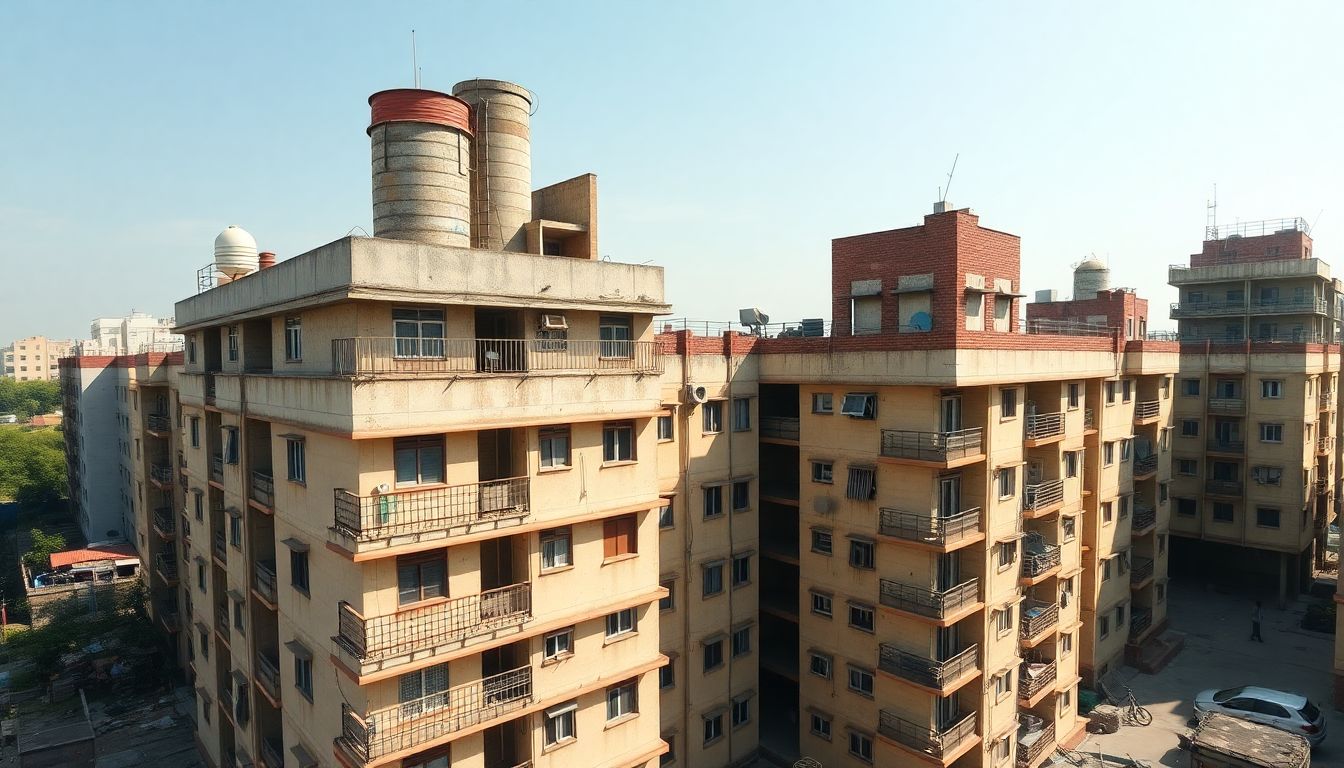
The Delhi Development Authority (DDA) has officially revised its housing policy for the first time since 2007, allowing owners of upper-floor flats in low-rise housing blocks across Delhi to construct certain permanent structures. The policy revision, which has been rationalised in consultation with the Ministry of Housing and Urban Affairs, introduces a new framework for additions and alterations to DDA flats.
Under the updated policy, flat owners living in two-, three-, and four-storey residential buildings are now permitted to construct permanent structures. Specifically, these structures can be built over an area created by covering a courtyard or the resultant terrace of the floor below. The DDA stated that this move is designed to help residents secure additional usable space while ensuring that housing colonies maintain a sense of visual uniformity.
However, flat owners must adhere to strict conditions to qualify for these permissions. The policy dictates that any new construction must not obstruct common circulation areas, such as staircases or pathways. It must also not interfere with existing utility services, including water pipelines, electricity cabling, or drainage systems. Additionally, any new structure must conform entirely to the approved layout plan of the housing pocket and comply with all technical and planning provisions.
The initiative is also designed to address past modifications. The DDA noted that the policy aims to simplify the regularisation process for flat owners who have already carried out additional construction on their properties without prior formal approval.
Moving forward, all cases concerning flat alterations and additions will be processed in accordance with this revised policy. The physical implementation and enforcement of these rules will be managed by either the DDA or the Municipal Corporation of Delhi (MCD), depending on which agency has jurisdiction over the specific residential area.