
DDA Launches Delhi Ridge Restoration to Plant 181,000 Indigenous Trees and Shrubs
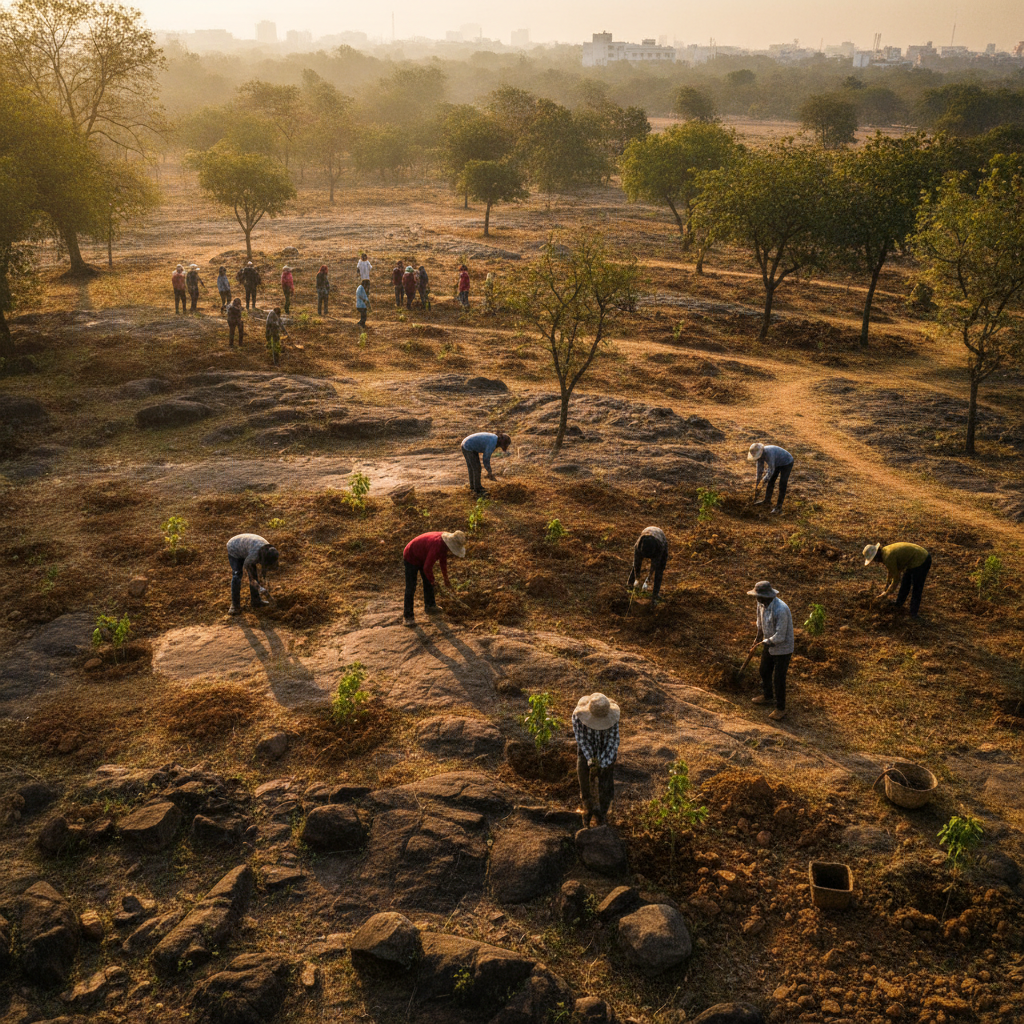
The Delhi Development Authority (DDA) has launched a scientific ecological restoration programme across Nanakpura Ridge, Kamla Nehru Ridge, South Central Ridge, and Central Ridge, aiming to plant 181,000 indigenous trees and shrubs. Officials said on Monday that the project will cover nearly 120 hectares during the current plantation season, following directions from Lieutenant Governor Taranjit Singh Sandhu to restore the native forest ecosystem by replacing invasive vegetation and ensuring sustained post-plantation maintenance.
As part of the Ridge restoration effort, the DDA will clear approximately 16,240 invasive trees and shrubs from the area. In their place, officials will plant nearly 100,000 indigenous trees and 81,700 native shrubs across the covered locations.
To rebuild the natural environment, the authority is implementing a scientifically designed, grid-based, multi-tier model intended to recreate the layered structure of natural forests. The tree species selected for the plantation drive include bargad, peepal, neem, sheesham, arjun, jamun, dhak (palash), dhau, and khejri. Native shrubs being planted include harshringar, karonda, phalsa, nirgundi, and curry leaf.
The drive is part of the Centre’s '70 Lakh Plantation Mission', launched under the 'Ek Ped Maa Ke Naam' campaign. Under this broader national effort, the DDA has been given a mandate to plant a total of 2.3 million indigenous saplings across the national capital.
The ongoing plantation season began in the first week of July and is scheduled to run through mid-September. To date, the authority has planted over 829,000 saplings across Delhi, which includes 35,570 trees and 793,000 shrubs. In the Ridge area alone, workers have already planted 27,062 saplings, consisting of 12,506 trees and 14,556 shrubs.
According to the DDA, the ecological restoration programme is expected to improve biodiversity, enhance air quality, and increase climate resilience. The initiative is also designed to promote groundwater recharge, reduce soil erosion, and help mitigate the urban heat island effect across the city.