CPCB Assesses Rs 31.4 Crore Penalty on Haryana Power Plant for Major Emission Violations
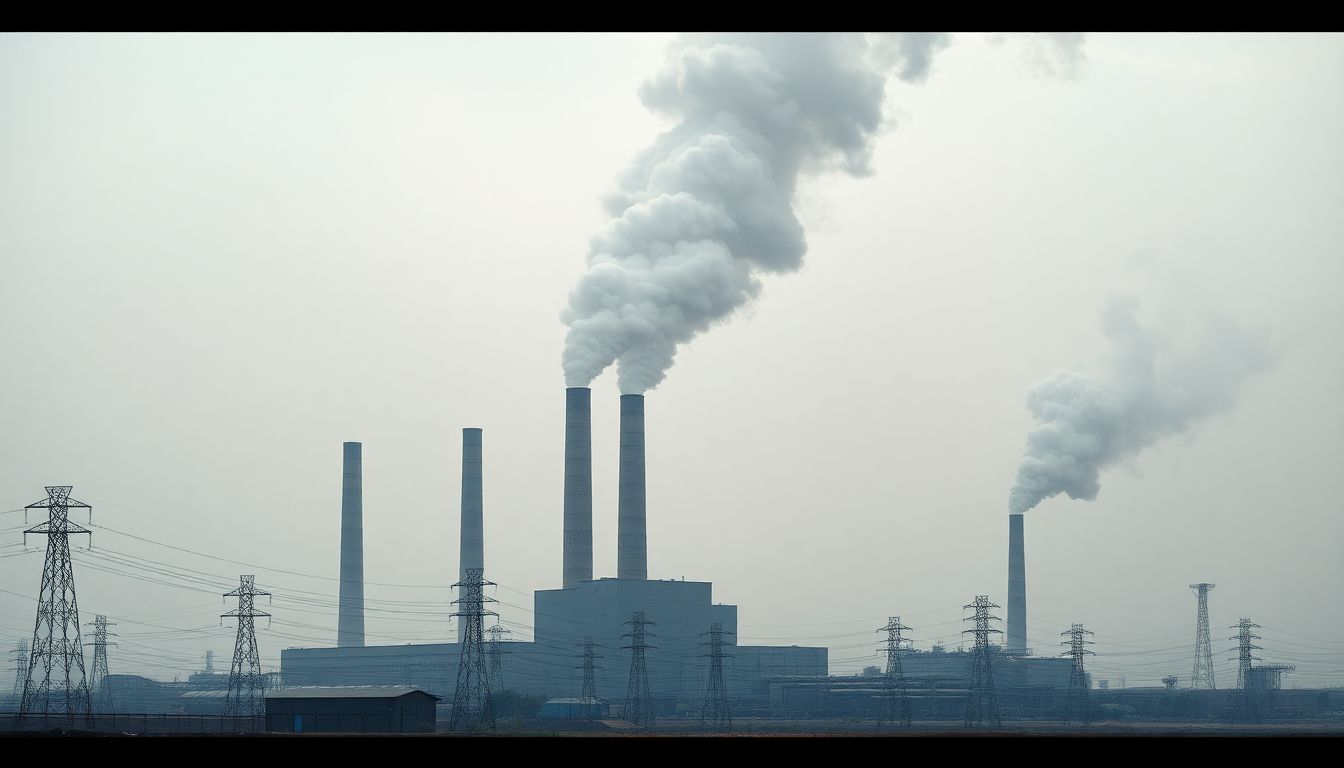
NEW DELHI — The Central Pollution Control Board has detected significant particulate matter emission violations at two thermal power plants located within a 300-kilometre radius of Delhi, resulting in an interim environmental compensation assessment of Rs 31.4 crore against a facility in Haryana.
The findings were detailed in regulatory directions dated June 23, 2026, issued to the Deen Bandhu Chhotu Ram Thermal Power Project at Pansara in Haryana’s Yamuna Nagar district and the Guru Hargobind Thermal Power Plant in Bathinda, Punjab. The documents were recently accessed through a Right to Information application filed by activist Amit Gupta.
At the Yamuna Nagar facility, the pollution board conducted stack-emission monitoring on two 300-megawatt units on February 10 and 11. Testing revealed that both units breached the prescribed particulate matter limit of 50 mg/Nm³. Unit-1 recorded an emission level of 63.9 mg/Nm³, while Unit-2 registered 1,939 mg/Nm³, representing an emission level nearly 38.8 times higher than the legally permissible ceiling.
Following the inspection, the central regulator calculated an interim environmental penalty of Rs 31.4 crore for the Pansara plant based on its operational output during the assessed period of non-compliance. Official records show the facility generated 786.6 million units of electricity during that timeframe, with the compensation assessed at a rate of Rs 0.40 per unit of power generated.
The regulatory directive noted that the final environmental compensation amount may be adjusted depending on the plant’s subsequent compliance measures. In addition to the action taken against the Yamuna Nagar project, the Central Pollution Control Board directed the Guru Hargobind Thermal Power Plant in Bathinda to undergo a similar compensation assessment for emission violations.
According to findings in the RTI disclosures, the inspected power facilities have continued to operate with elevated emission levels throughout the year and have not installed flue gas desulphurisation devices to curb atmospheric pollution.