Bookseller Dilshad Ali Reflects on 25 Years at Central Delhi's Mahila Haat
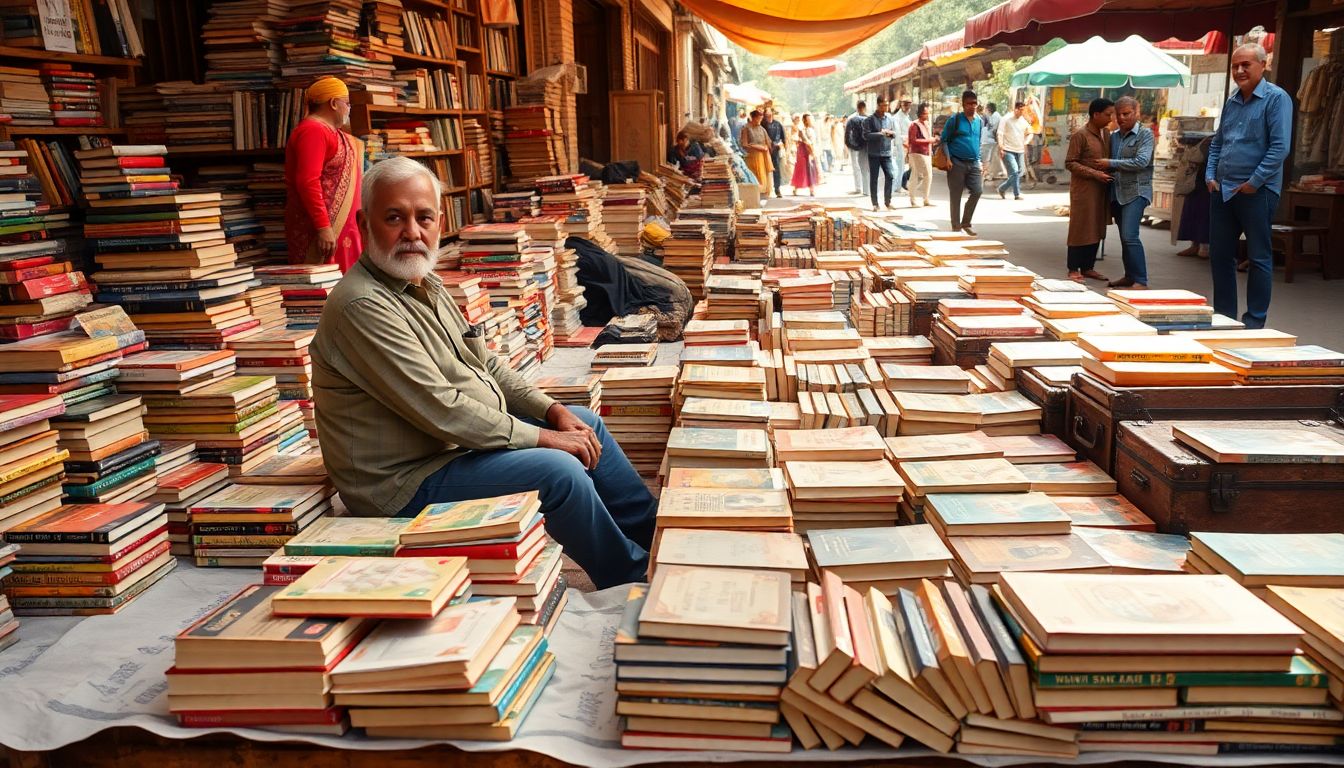
Dilshad Ali, a second-hand bookseller who has been operating at Delhi's Sunday Book Bazar for 25 years, set up his stall at Mahila Haat in Central Delhi on a sweltering Sunday noon. Ali arrives every Sunday with street trunks crammed with used books, laying them out on plastic sheets in his allotted space among dozens of other sellers. His stall is particularly popular with literature students because it stocks English authors taught in university classes.
Ali's trade in Central Delhi carries on a tradition similar to Dana Mian, a second-hand book dealer who walked the hills of Nainital decades ago with a coolie carrying a steel trunk of books. At Mahila Haat, Ali manages street trunks filled with used books, serving university students and literature readers who visit the weekly market.
Describing his background, Ali stated that he is from a village, is not "hi-fi", and avoids "hera-pheri". He identified collecting books and selling them at the weekly market as his favourite occupation. He noted that happiness has no "paimana" (measure) and comes from being with friends ("yaar-dost") and sharing moments of joy ("khushi ke pal") with fellow booksellers.
Ali explained that while a Sunday ending with a good sale brings happiness, booksellers do not become "mayoos" (disappointed) during periods of low sales, as business naturally goes up and down. His regular routine at the Sunday Book Bazaar includes drinking lassi in the afternoon after lunch.
Regarding current book trends, Ali noted that Homer's Odyssey is selling even more than usual, as it is assigned in Delhi University courses. Addressing his sales approach, Ali stated that he does not encourage bargaining, acknowledging that customers might view it as a fault. He explained that if he prices a copy of Middlemarch at 200 rupees, the price remains fixed at 200 rupees.
Ali also recounted personal misfortunes, including the death of his mother and the death of his wife's sister ("saali") two years ago. Following his sister-in-law's death, Ali took responsibility for raising her young daughter. Reflecting on life, Ali added that he does not view himself as overly important, stating that nature ("kudrat") does not care for or depend on his existence.