Ashwani Kumar Urges Early Gender Sensitisation at Modern School Barakhamba Road
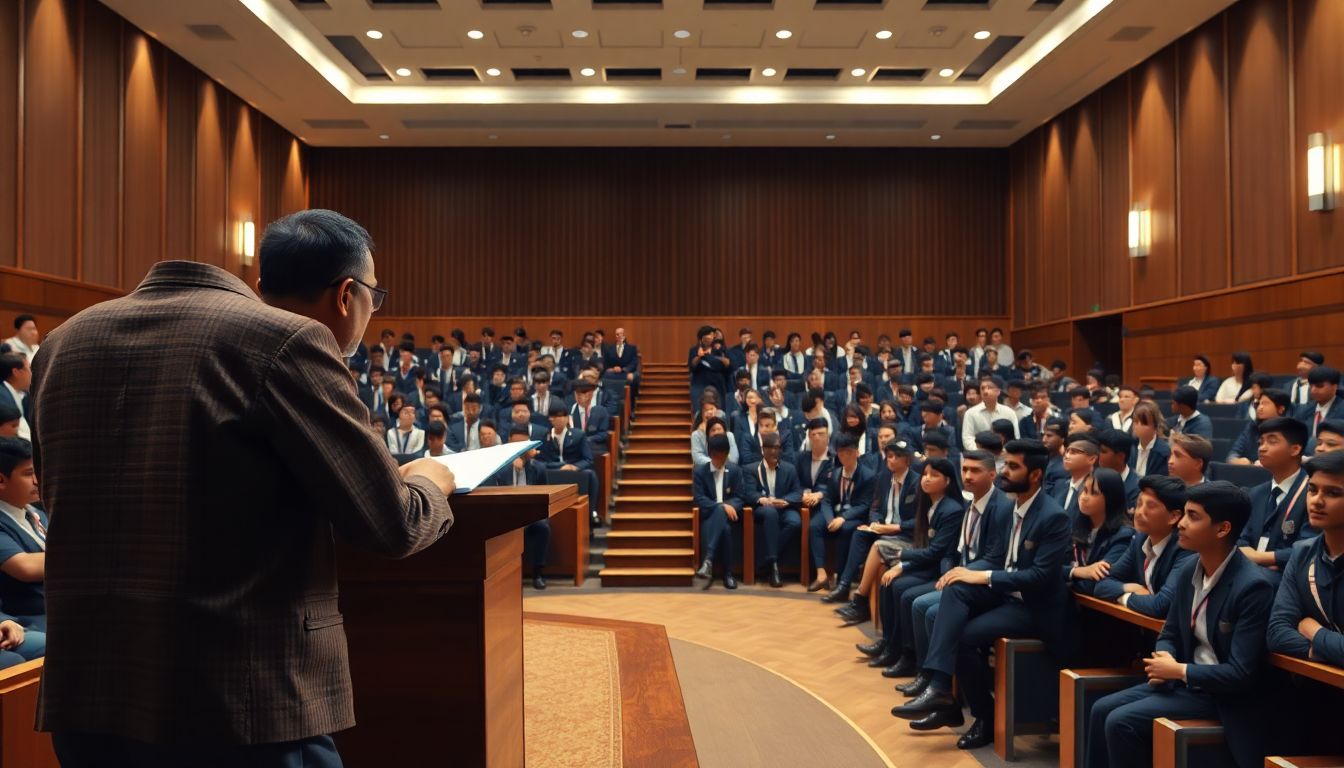
Emphasising that women's safety begins with shaping the attitudes of children, IAS officer Ashwani Kumar stated on Saturday that schools must play a central role in teaching boys respect, dignity, equality, and consent from an early age. He was speaking after a special screening of his acting debut film, Devyani, held at Modern School on Barakhamba Road in New Delhi.
Students gathered at the school to participate in discussions centered on women's safety, female empowerment, and the relationship between a father and his daughter. Kumar, who currently serves as Secretary in the Assam government's Information Technology Department and as Director at the Directorate of Information Technology, Electronics and Communication, noted that while laws and policing are essential, lasting reform requires transforming social behaviour at its roots.
Kumar said that women's safety begins long before any matter reaches law enforcement or the courts, starting instead with the values taught at home and in classrooms. He added that when young boys learn that respecting women is a fundamental human value, it fosters a generation that is more responsible and empathetic. He pointed out that the goal should extend beyond teaching girls self-protection to ensuring boys actively contribute to building a safer environment.
Addressing the characteristics of Gen Z and Gen Alpha, Kumar noted that younger generations are exposed to information earlier than previous generations and actively question traditional assumptions. He observed that young people challenge stereotypes rather than accepting established norms, giving educators and families a critical opportunity to engage them early on equality and dignity.
Modern School Principal Dr Vijay Datta noted that educational institutions provide a formative environment where students develop lifelong attitudes. He stated that schools have a crucial responsibility to guide students to view women as equals, which they will eventually carry into their workplaces and society. Datta added that women's safety should be treated as an open dialogue on social behaviour rather than strictly a law-and-order concern.
Datta also highlighted that cinema serves as an impactful medium for such conversations, as audiences connect with storytelling more readily than with formal instructions. Kumar echoed this view, stating that storytelling creates empathy and influences minds at an emotional level to support long-term social change.